Global Markets on Edge: Geopolitical Tensions, Tech Earnings, and Iran Blockade Reshape Economic Landscape


Lead: Global markets are navigating a perfect storm of geopolitical flashpoints, corporate earnings shocks, and strategic pivots that are redefining economic fault lines from Tehran to Wall Street.
The Big Picture: The U.S.-led blockade of Iranian ports has escalated into a full-blown economic confrontation, sending shockwaves through oil markets and supply chains. Meanwhile, corporate America is grappling with the dual pressures of geopolitical risk and the AI-driven transformation of traditional industries. The result? A market landscape where every headline carries the weight of billions in capital flows and strategic realignments.
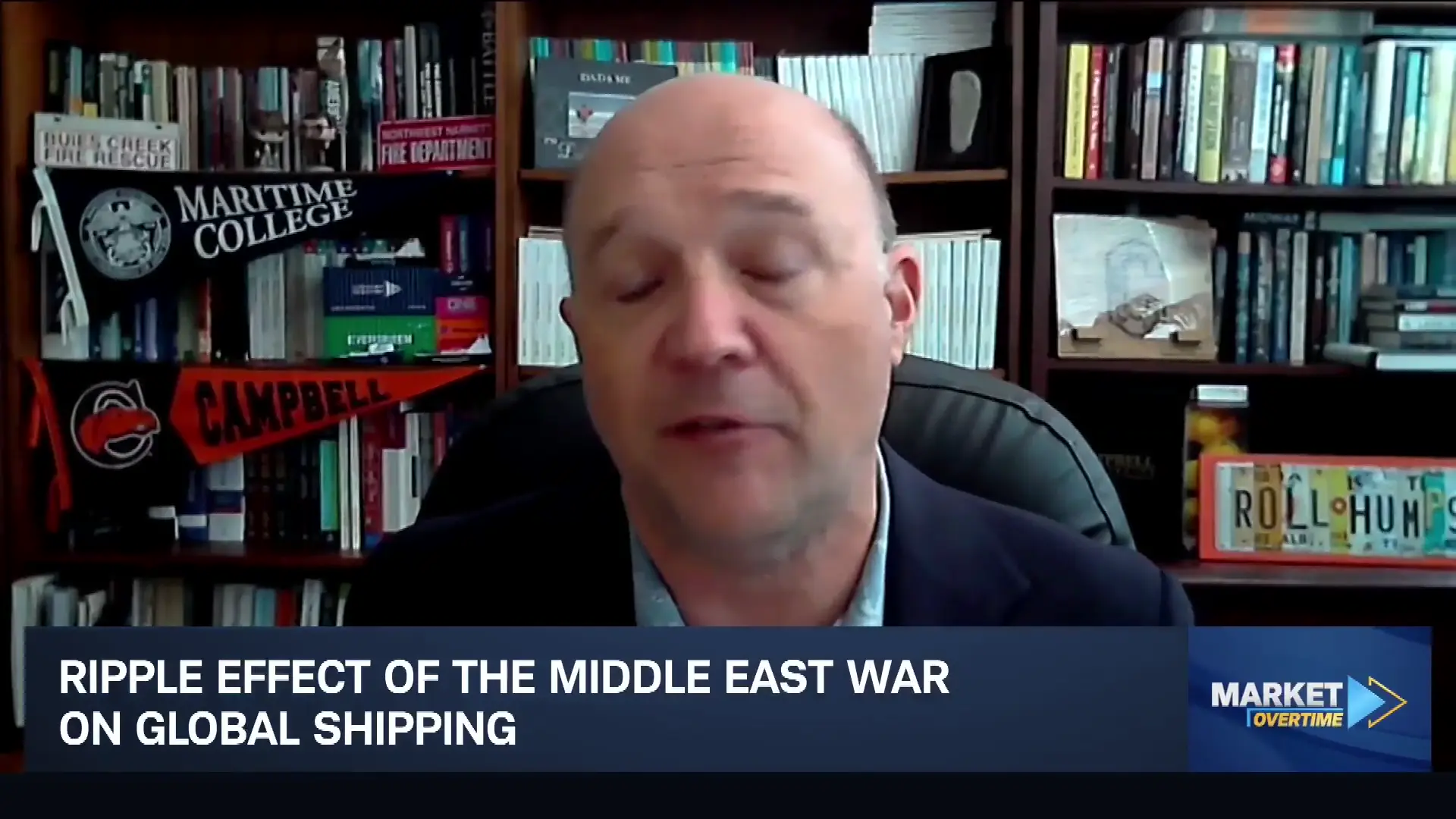
Geopolitical Flashpoint: The U.S. announcement of a blockade targeting Iranian ports—excluding humanitarian exceptions—has triggered a legal and economic earthquake. Analysts warn this constitutes a "technical act of war" under international law, with immediate consequences for global shipping and energy markets. The move comes as Iran’s oil exports face unprecedented pressure, with U.S. Navy vessels now monitoring and intercepting ships in the Persian Gulf. The humanitarian impact is already visible: fertilizer exports (MAP, DAP, urea) and grain supplies are under siege, threatening crop yields across Asia and Africa. "This isn’t just about oil—it’s about the global food chain," warns Sal Mercogliano, maritime historian and Schwab Network contributor. The blockade’s mechanics reveal a distant naval strategy, where monitoring ships and intercept operations are governed by the textbook of naval war, but the economic fallout is anything but textbook.
Market Reactions: Wall Street’s initial response has been a textbook risk-off trade. Crude oil prices surged 4% to $93/barrel, while the S&P 500 and Nasdaq 100 hit all-time highs—a divergence that underscores the bifurcation of macroeconomic sentiment and micro-level corporate performance. The Iran ceasefire extension, announced by President Trump, provided only temporary relief, with internal Iranian leadership fractures complicating the diplomatic picture. "The market is pricing in a long game here," notes Diane Kinghall, Schwab Network’s market analyst. "Geopolitical risk is no longer a sidebar—it’s the main event."
Corporate Earnings Chaos: The earnings season has become a battleground between legacy industries and AI-driven disruptors. Tesla’s Q1 2026 report delivered a revenue beat ($22.39B vs. $22.19B expected) and EPS surprise (41 cents vs. 34 cents), but the real story lies in its strategic pivot. CEO Elon Musk’s push into semiconductor fabrication and AI inference compute—including potential chip sales beyond Tesla—signals a direct challenge to NVIDIA and AMD. "Tesla is no longer just an automaker; it’s a tech platform," argues KG, Schwab Network’s semiconductor analyst. "The question isn’t whether they’ll compete with NVIDIA—it’s how fast they’ll scale."
Defense Sector Windfall: The defense industry is the clear beneficiary of geopolitical tensions. Boeing’s stock surged on news of a $695 billion backlog and S&P Global Ratings’ upgrade to BBB- with a stable outlook. Analysts cite "defense sector optimism" as the primary driver, with government spending on PAC-3 interceptor missiles and other high-tech platforms fueling a market recovery. "Boeing is back in the government’s good graces," notes Luke Lloyd, Lloyd Financial Group president. "The fundamentals are strong, and the rating upgrade removes a major overhang."
Tech Sector Schism: The software sector is splitting into winners and losers. ServiceNow’s earnings beat ($3.75B revenue, $0.93 adjusted EPS) contrasted sharply with IBM’s mixed results, highlighting the AI divide. Adobe’s $25 billion stock buyback and CEO transition underscore the sector’s struggle to balance legacy cash cows with AI-driven disruption. "The market is rewarding companies that can execute on AI integration," says Dan Ives of Wedbush. "IBM’s transformation is a work in progress, but Adobe’s buyback shows confidence in its AI roadmap."
Commodities in the Crossfire: Gold and oil markets are caught in a tug-of-war between central bank demand and geopolitical risk. David McElvaney, McElvaney Financial Companies founder, warns that gold’s "floor" is now set by central bank holdings, while oil’s "war premium" could persist as long as the blockade continues. "We’re in a secular bull market for commodities," McElvaney argues. "The question is whether the macro environment can sustain it."
The Human Cost: Beyond the numbers, the blockade is exacting a humanitarian toll. Merchant mariners—from the Philippines to Ukraine—are caught in the crossfire, with fertilizer and grain shipments disrupted. The U.S. Central Command’s enforcement of the blockade, while framed as a military operation, has ripple effects on global food security. "This isn’t just an economic issue; it’s a humanitarian crisis," warns Laura De Bello, Federal Maritime Commission Chair. "The merchant marine is the backbone of global trade, and they’re being squeezed from all sides."
What’s Next: The coming weeks will test the resilience of global markets. Will the Iran ceasefire hold? Can Tesla’s AI ambitions disrupt the semiconductor oligopoly? Will Boeing’s defense bonanza translate into long-term growth? One thing is clear: the old playbook no longer applies. "We’re in uncharted territory," says Alec Young, MoneyFlows.com strategist. "The interplay between geopolitics, AI, and corporate strategy is creating a new economic paradigm—one where every headline has the potential to move markets."
Top Political News, Issues and People
schwab-network's Best Political Coverage: Geopolitical Economic Coercion and Market Reactions
U.S.-Iran Blockade Escalation: The U.S. announcement of a blockade targeting Iranian ports has triggered a legal and economic earthquake. Analysts warn this constitutes a "technical act of war" under international law, with immediate consequences for global shipping and energy markets. The move comes as Iran’s oil exports face unprecedented pressure, with U.S. Navy vessels now monitoring and intercepting ships in the Persian Gulf. The humanitarian impact is already visible: fertilizer exports (MAP, DAP, urea) and grain supplies are under siege, threatening crop yields across Asia and Africa. "This isn’t just about oil—it’s about the global food chain," warns Sal Mercogliano, maritime historian and Schwab Network contributor. The blockade’s mechanics reveal a distant naval strategy, where monitoring ships and intercept operations are governed by the textbook of naval war, but the economic fallout is anything but textbook.
Ceasefire Dynamics: President Trump’s announcement of an Iran ceasefire extension provided only temporary relief, with internal Iranian leadership fractures complicating the diplomatic picture. The ceasefire’s fragility is underscored by the U.S. blockade, which analysts argue is designed to pressure Iran into broader concessions. "The market is pricing in a long game here," notes Diane Kinghall, Schwab Network’s market analyst. "Geopolitical risk is no longer a sidebar—it’s the main event."
Apple’s Leadership Transition: Tim Cook’s 15-year tenure as Apple CEO concluded with his transition to executive chairman, marking a strategic shift toward hardware and AI integration. The move comes as Apple faces geopolitical pressures in China and competition from AI-driven rivals. "Cook’s legacy is secure, but the road ahead is about execution," argues John Ternus, Apple’s incoming CEO. "We’re doubling down on hardware and AI integration."
Fed Policy Under Scrutiny: Kevin Warsh’s Senate confirmation hearings for the Federal Reserve spotlighted the central bank’s balancing act between inflation control and economic growth. Warsh, a former Fed governor, emphasized the "productivity miracle" driven by AI while warning of inflation risks. "The Fed’s challenge is to avoid choking off innovation while keeping prices stable," Warsh told senators. His dovish tone contrasted with hawkish colleagues, signaling potential policy divergence.
Defense Spending Surge: The Trump administration’s budget proposals and NATO commitments are fueling a defense sector boom. RTX and GE Aerospace earnings reflected strong backlog growth and government spending, with analysts highlighting "defense sector optimism" as the primary driver. "This isn’t just a cyclical uptick—it’s a structural shift," says Kevin Mann, Henny and Walsh Asset Management. "The geopolitical environment is rewriting the rules for defense contractors."
Press Monitor Clips: Geopolitical Economic Coercion and Market Reactions; Iran Ceasefire Extension and Political Developments; U.S.-Iran Blockade and War Powers Analysis
schwab-network's Best Business Coverage: AI Disruption and Corporate Strategy Shifts
Tesla’s AI Ambitions: Tesla’s Q1 2026 earnings report delivered a revenue beat ($22.39B vs. $22.19B expected) and EPS surprise (41 cents vs. 34 cents), but the real story lies in its strategic pivot. CEO Elon Musk’s push into semiconductor fabrication and AI inference compute—including potential chip sales beyond Tesla—signals a direct challenge to NVIDIA and AMD. "Tesla is no longer just an automaker; it’s a tech platform," argues KG, Schwab Network’s semiconductor analyst. "The question isn’t whether they’ll compete with NVIDIA—it’s how fast they’ll scale."
Boeing’s Defense Bonanza: Boeing’s stock surged on news of a $695 billion backlog and S&P Global Ratings’ upgrade to BBB- with a stable outlook. Analysts cite "defense sector optimism" as the primary driver, with government spending on PAC-3 interceptor missiles and other high-tech platforms fueling a market recovery. "Boeing is back in the government’s good graces," notes Luke Lloyd, Lloyd Financial Group president. "The fundamentals are strong, and the rating upgrade removes a major overhang."
Software Sector Schism: The software sector is splitting into winners and losers. ServiceNow’s earnings beat ($3.75B revenue, $0.93 adjusted EPS) contrasted sharply with IBM’s mixed results, highlighting the AI divide. Adobe’s $25 billion stock buyback and CEO transition underscore the sector’s struggle to balance legacy cash cows with AI-driven disruption. "The market is rewarding companies that can execute on AI integration," says Dan Ives of Wedbush. "IBM’s transformation is a work in progress, but Adobe’s buyback shows confidence in its AI roadmap."
Commodities in the Crossfire: Gold and oil markets are caught in a tug-of-war between central bank demand and geopolitical risk. David McElvaney, McElvaney Financial Companies founder, warns that gold’s "floor" is now set by central bank holdings, while oil’s "war premium" could persist as long as the blockade continues. "We’re in a secular bull market for commodities," McElvaney argues. "The question is whether the macro environment can sustain it."
American Express’s Consumer Resilience: American Express’s 2025 earnings highlighted revenue growth of 10% and strong customer satisfaction metrics. The company’s focus on affluent customers and travel demand—despite a "K-shaped economy"—demonstrated the resilience of premium consumer spending. "Affluent consumers are still spending, and that’s a tailwind for Amex," notes Landon Swan, American Express analyst. "The question is whether this trend can continue amid geopolitical uncertainty."
Semiconductor Industry Upheaval: The semiconductor industry is undergoing a seismic shift, with NVIDIA’s AI-driven rally contrasting with AMD’s struggles to keep pace. Tesla’s entry into semiconductor fabrication—potentially selling custom silicon to third parties—could further disrupt the oligopoly. "The AI chip cycle is creating winners and losers," says KG. "NVIDIA is the clear leader, but the field is wide open for disruptors like Tesla."
Defense Sector’s Structural Tailwinds: The defense industry is the clear beneficiary of geopolitical tensions. Boeing’s market recovery, RTX’s earnings beat, and GE Aerospace’s strong backlog growth reflect a sector that’s benefiting from government spending and global instability. "This isn’t just a cyclical uptick—it’s a structural shift," says Kevin Mann. "The geopolitical environment is rewriting the rules for defense contractors."
AI Infrastructure Race: Google’s launch of its next-generation TPU v6 chips highlights the intensifying AI infrastructure race. The chips promise "improvements in price performance" and deeper integration with AI models, putting pressure on NVIDIA and AMD. "The AI infrastructure market is becoming winner-takes-all," argues George Tillis, Axe Compute founder. "The companies that can scale fastest will dominate."
Press Monitor Clips: Tesla Earnings Analysis: Strong Beat on Revenue and Guidance; Boeing Financial Analysis Segment; ServiceNow and IBM Earnings Deep Dive: Mixed Results and Market Reactions
schwab-network's Best Sports Coverage: No Top Stories Selected
Note: No sports stories were selected for today’s roundup.
Press Monitor Clips: N/A
schwab-network's Best in Other Coverage: Corporate Earnings and Market Sentiment
Apple’s Leadership Transition: Tim Cook’s 15-year tenure as Apple CEO concluded with his transition to executive chairman, marking a strategic shift toward hardware and AI integration. The move comes as Apple faces geopolitical pressures in China and competition from AI-driven rivals. "Cook’s legacy is secure, but the road ahead is about execution," argues John Ternus, Apple’s incoming CEO. "We’re doubling down on hardware and AI integration."
Tesla’s Robotics Revolution: Tesla’s Q1 2026 earnings report delivered a revenue beat ($22.39B vs. $22.19B expected) and EPS surprise (41 cents vs. 34 cents), but the real story lies in its strategic pivot. CEO Elon Musk’s push into Optimus robot production, Full Self-Driving (FSD) expansion, and robo-taxi deployments signals a broader ambition: Tesla is evolving from an automaker into a robotics and AI platform. "The AI narrative shift is real," says Sam, Schwab Network’s tech analyst. "Tesla’s future isn’t just about cars—it’s about robots and autonomous systems."
Boeing’s Market Recovery: Boeing’s stock surged on news of a $695 billion backlog and S&P Global Ratings’ upgrade to BBB- with a stable outlook. Analysts cite "defense sector optimism" as the primary driver, with government spending on PAC-3 interceptor missiles and other high-tech platforms fueling a market recovery. "Boeing is back in the government’s good graces," notes Luke Lloyd, Lloyd Financial Group president. "The fundamentals are strong, and the rating upgrade removes a major overhang."
ServiceNow’s Earnings Beat: ServiceNow’s earnings beat ($3.75B revenue, $0.93 adjusted EPS) contrasted sharply with IBM’s mixed results, highlighting the AI divide. The company’s focus on SaaS growth and AI integration—despite a broader software sector sell-off—demonstrated the resilience of companies that can execute on AI-driven transformation. "ServiceNow is the poster child for AI integration," says Kevin Hanks, Schwab Network analyst. "The market is rewarding companies that can deliver on their AI promises."
IBM’s AI Transformation: IBM’s earnings report underscored the challenges of transitioning from traditional enterprise software to AI-driven solutions. While the company’s hybrid cloud and AI adoption showed promise, the broader market sell-off in software stocks highlighted the risks of execution. "IBM’s transformation is a work in progress," says Arvind Krishna, IBM CEO. "But the market is impatient for results."
Adobe’s AI Competition: Adobe’s $25 billion stock buyback and CEO transition underscore the sector’s struggle to balance legacy cash cows with AI-driven disruption. The company’s competitive pressures from AI tools like Claude Design—capable of rivaling Adobe’s core products—highlight the urgency of its AI roadmap. "Adobe’s buyback shows confidence in its AI strategy," notes Adobe CEO. "But the competition is fierce."
Google’s AI Infrastructure Push: Google’s launch of its next-generation TPU v6 chips highlights the intensifying AI infrastructure race. The chips promise "improvements in price performance" and deeper integration with AI models, putting pressure on NVIDIA and AMD. "The AI infrastructure market is becoming winner-takes-all," argues George Tillis, Axe Compute founder. "The companies that can scale fastest will dominate."
United Airlines’ Fuel Cost Crisis: United Airlines’ earnings report highlighted the airline sector’s struggles with fuel costs and capacity cuts. The company’s focus on premium travelers and fare increases underscored the sector’s reliance on high-margin customers amid geopolitical uncertainty. "Fuel costs are the elephant in the room," says Sean Cudahy, United Airlines analyst. "Until that changes, the sector’s recovery will be uneven."
SpaceX’s IPO Hype: Wall Street’s sentiment toward SpaceX’s upcoming IPO is a study in contrasts. While retail investors are "frothing at the mouth," analysts warn that the hype may not translate into sustainable value. "SpaceX is a story stock," notes SpaceX analyst. "The fundamentals are strong, but the valuation is stretched."
Schwab Network’s Platform Expansion: Schwab Network’s branding segments highlighted its push into 24/7 live streaming, app access, and round-the-clock trading support. The network’s focus on "Next Gen Investing" and "Morning Movers" reflects a broader trend toward real-time, data-driven market analysis. "We’re not just covering the market—we’re redefining how investors engage with it," says Alex Coffey, Schwab Network host.
Press Monitor Clips: ServiceNow and IBM Earnings Deep Dive: Mixed Results and Market Reactions; Tesla Q1 2026 Earnings Analysis: Revenue, Profits, and Strategic Updates; Adobe Stock Buyback and AI Competition

Industry Solutions