Trump’s Deregulatory Blitz, Iran Tensions, and Legal Ethics: The Day’s Must-Watch Political and Geopolitical Stories


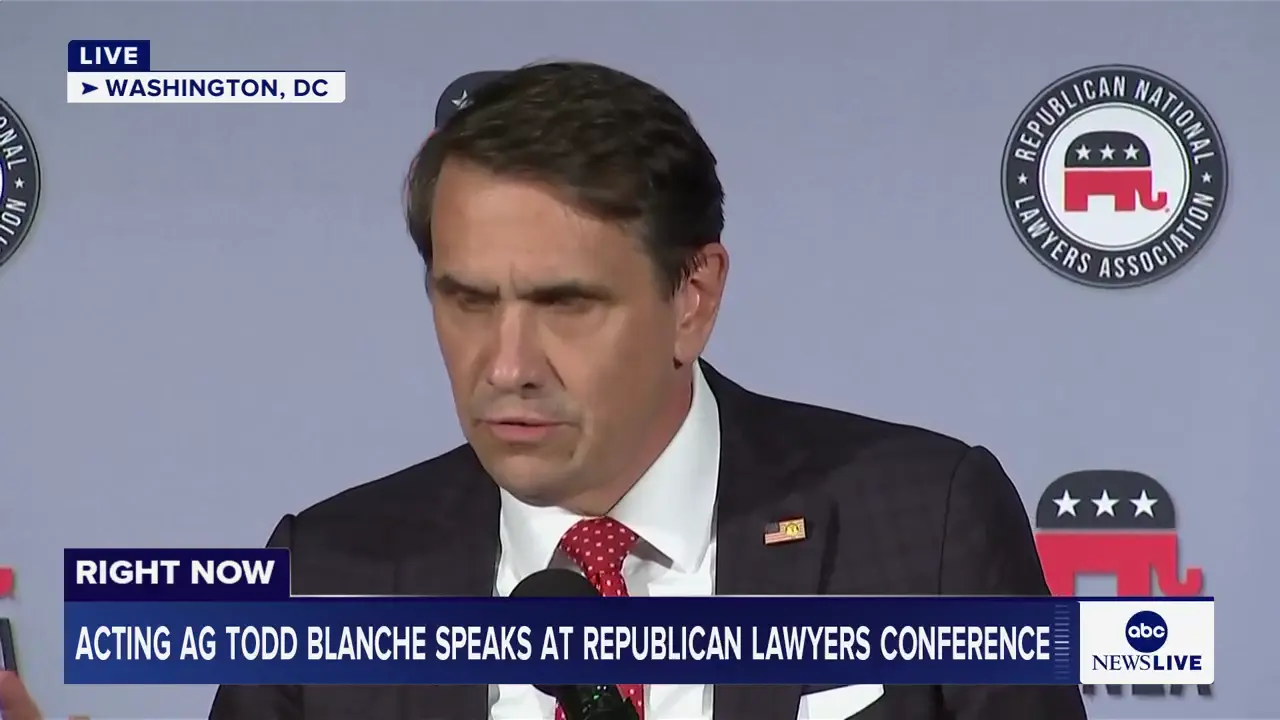
A day of seismic shifts in Washington saw President Trump’s deregulatory agenda hit new highs, the Supreme Court endorse sweeping executive branch restructuring, and fresh diplomatic gambits in the Middle East amid escalating Iran tensions. At the same time, the legal profession faced renewed scrutiny over ethics and independence, while U.S. military operations in the Strait of Hormuz underscored the administration’s assertive foreign policy. These stories dominated today’s coverage, revealing a White House in full command of its agenda, a judiciary validating executive power, and a world where traditional alliances and adversaries alike are recalibrating their strategies.
Top Political News, Issues and People
Executive Power Surge: Trump’s Deregulatory Blitz Reshapes Washington
President Trump’s deregulatory agenda took center stage as the administration touted a record-breaking 129 deregulatory actions for every new regulation, projecting $212 billion in savings and $1.4 trillion in long-term economic benefits. The White House Office of Management and Budget (OMB) framed these moves as a historic reversal of Obama-Biden policies, particularly targeting the EPA’s endangerment finding and California’s aggressive electric vehicle mandates. The administration’s deregulatory ratio of 129:1 dwarfed initial targets, signaling an unprecedented scale of policy rollback designed to stimulate energy production and economic growth.
The deregulatory push was not just about numbers. It represented a fundamental restructuring of executive authority, with the Supreme Court’s recent ruling upholding the firing of independent agency heads and new regulations to ensure presidential control over federal policy implementation. This legal validation of executive power was hailed as a restoration of constitutional order, contrasting sharply with progressive critiques of executive overreach. The administration’s use of Schedule F—a mechanism to reclassify federal workers—further consolidated control over the bureaucracy, ensuring that policy implementation aligned with the president’s vision.
Panel discussions highlighted the administration’s ambition to achieve ‘energy dominance’ and reverse what it described as the ‘war on gas’ in California. The EPA’s rescission of the Obama-Biden endangerment finding was presented as a cornerstone of this strategy, with projections of $1.4 trillion in savings over a decade. The administration’s narrative emphasized restoring American strength on the global stage, framing deregulation as a path to economic revival and geopolitical influence.
Press Monitor Clips: President's Deregulatory Achievements; Supreme Court Upholds Trump Executive Branch Restructuring; Trump Administration's Deregulatory Agenda and Executive Unity
Federal Spending Reform: Impoundment and the Fight Against Waste
The administration contrasted its fiscal discipline with the Biden administration’s spending habits, invoking historical precedents like the Impoundment Control Act to justify executive action on federal funding. Highlights included plans to rescind $9 billion in unspent funds and a $1 billion cut to the Corporation for Public Broadcasting (CPB), framed as a defense of constitutional principles against ‘fraudulent programs’ and ‘wasteful spending.’ The speaker emphasized the president’s role as a ‘check writer,’ defending the Constitution against what was described as passive governance from past administrations.
This narrative of fiscal responsibility extended to the president’s use of executive powers to halt funding to ‘left-wing NGOs’ and other entities deemed to undermine constitutional governance. The administration’s argument centered on the need to restore balance between federal spending and constitutional constraints, positioning Trump as a defender of taxpayer dollars and institutional integrity.
Press Monitor Clips: Federal Spending and Impoundment History; Presidential Powers and Executive Action
Legal Ethics Under Fire: The Role of Lawyers in Upholding the Rule of Law
A panel discussion on legal ethics explored the tension between advocacy and endorsement in legal practice, with a focus on the Department of Justice’s (DOJ) mission to enforce the law and protect constitutional rights. The segment underscored the legal profession’s collective responsibility in shaping judicial outcomes and upholding the rule of law, particularly in the face of political pressures. Concerns were raised about potential discrimination against lawyers based on political beliefs, with the DOJ’s enforcement role highlighted as critical to maintaining legal system integrity.
The discussion also touched on the DOJ’s aggressive stance against violent crime and transnational criminal groups, as well as its commitment to protecting Second Amendment rights and the free exercise of religion. These themes were framed as essential to preserving public safety and the legal system’s independence from political interference.
Press Monitor Clips: Discussion on Legal Ethics and Advocacy in Government; Department of Justice Mission and Legal System Strength
Diplomatic Maneuvering: U.S.-Iran Talks and the Kurdistan Crisis
The administration’s diplomatic efforts to de-escalate tensions with Iran took a dramatic turn with the dispatch of Special Envoys Steve Witkoff and Jared Kushner to Pakistan. The mission aimed to address Iran’s diplomatic stance following questions about its sincerity in negotiations, with discussions centered on a potential ceasefire extension. The segment also covered the Kurdistan region’s escalating conflict, including drone and missile attacks attributed to the Iranian regime, which violated ceasefire agreements and fueled regional instability.
These developments highlighted the administration’s dual-track approach to Iran: a willingness to engage diplomatically while simultaneously enforcing a blockade on Iranian vessels in the Strait of Hormuz. The blockade, which included the seizure of Iranian ships, was presented as a necessary measure to counter Iran’s aggressive actions against global shipping and its neighbors.
Press Monitor Clips: U.S.-Iran Diplomatic Efforts: Pakistan Mission and Ceasefire Extension; Kurdistan Region Conflict Updates
Marijuana Rescheduling and Federal Policy Shifts
A panel discussion on the administration’s decision to reschedule marijuana under federal law revealed a rare bipartisan consensus, with public polling showing strong support for the move. The segment explored the process behind the decision, including the role of the Federal Reserve and the confirmation process for key appointments like Senator Tillis. The discussion also touched on broader federal policy changes and their implications for public health and economic sectors.
Press Monitor Clips: Marijuana Rescheduling and Federal Policy Updates
Top Business News, Issues and People
Energy Dominance and Deregulation: The Business Case for Trump’s Agenda
The administration’s deregulatory agenda was framed as a boon for business, with the EPA’s rescission of the Obama-Biden endangerment finding projected to save $1.4 trillion over a decade. The focus on energy production and deregulation was presented as a pathway to economic revival, particularly in states like California where aggressive EV mandates had stifled traditional energy sectors. The administration’s narrative emphasized restoring American energy dominance and reversing what it described as the ‘war on gas.’
Press Monitor Clips: EPA Rescission and Energy Dominance
Top Sports News, Issues and People
Awards and Recognition: Celebrating Legal Excellence
The day’s lighter moments included a segment acknowledging colleagues and associates, with a focus on teamwork and shared effort. The segment highlighted the importance of recognizing contributions to the legal profession and the broader community, setting a tone of camaraderie and professional pride.
Press Monitor Clips: Acknowledging Colleagues
Other Top News, Issues and People
Geopolitical Tensions: Iran, the Strait of Hormuz, and Global Shipping
The Strait of Hormuz remained a flashpoint, with discussions on Iran’s mine threats, U.S. naval interdiction efforts, and the broader implications for global shipping. A panel analyzed the U.S. military’s response to Iranian aggression, including the seizure of Iranian vessels and the enforcement of a blockade. The segment also explored the role of intelligence professionals in supporting military operations, highlighting the critical interplay between collectors, analysts, and field operations.
The debate extended to whether the U.S. military should be recognized annually with the Nobel Peace Prize for its global security contributions, reflecting the administration’s emphasis on ‘peace through strength.’ Meanwhile, Operation Epic Fury—a rapid military success—was contrasted with past conflicts, emphasizing decisive results achieved in weeks rather than years.
Press Monitor Clips: Iran Mine Threat and Strait of Hormuz Blockade Analysis; U.S. Blockade of Iranian Ships: Updates and Escalation; Operation Epic Fury: Rapid Military Success
U.S.-EU Supply Chain Cooperation: Strengthening Economic Security
A high-level discussion on the U.S.-EU memorandum of understanding to strengthen supply chains and critical minerals cooperation underscored the administration’s focus on economic security. The agreement emphasized diversifying sourcing and operationalizing concrete deliverables to enhance global economic vibrancy and national security.
Press Monitor Clips: U.S.-EU Supply Chain Memorandum of Understanding Discussion
Legal Profession Reflections: Independence and Public Service
Extended interviews and panel discussions explored the challenges and rewards of being a lawyer, with a focus on independence, professional judgment, and the scrutiny faced by lawyers in public service. Segments highlighted the legal profession’s role in upholding the rule of law and the collective responsibility of lawyers in shaping judicial outcomes.
Press Monitor Clips: Reflecting on the Legal Profession; Legal Profession and the Rule of Law; Personal Legal Experience and Reflection
Local and Human Interest Stories: From Markets to Personal Narratives
The day’s coverage also included lighter, human-interest segments, such as discussions about local market disputes, weather conditions, and personal stories from individuals like Harry and Sini. These segments provided a respite from the heavier geopolitical and political news, offering a glimpse into the everyday lives and experiences of people across the country.
Press Monitor Clips: Local incident investigation; Personal narrative and reflection; Personal story discussion
The Big Picture: What These Stories Reveal
Today’s coverage painted a picture of a presidency in full command of its agenda, a judiciary validating executive power, and a world where traditional alliances and adversaries are recalibrating their strategies. The administration’s deregulatory blitz, combined with its assertive foreign policy and legal reforms, signaled a fundamental shift in governance. Meanwhile, the legal profession’s renewed focus on ethics and independence, and the geopolitical tensions in the Strait of Hormuz, underscored the stakes for global stability and economic security.
As the day drew to a close, the stories that dominated the coverage revealed a nation at a crossroads—one where the balance between executive power, constitutional constraints, and global responsibility is being tested like never before.

Industry Solutions