Business Intelligence

SITC

SITC is the United Nations trade classification used for economic analysis of merchandise trade and includes 2,970 basic headings in Revision 4. It is important for trade research, commodity trend analysis, and long-term comparison of imports and exports.

SITC

Why SITC-based monitoring matters

While HS is central to operational trade documentation, SITC is still important for macro trade analysis, statistical comparison, development research, and historical trade studies. If your users work in trade data, policy, and economics, SITC-aware retrieval adds real value.

What Problem Does It Solve?

Trade news becomes harder to compare when product groupings shift across datasets and time periods. SITC gives economists, researchers, and applications a stable trade-analysis vocabulary for monitoring broad product categories.

Who Is It For?

Economists, development researchers, and policy teams tracking international trade patterns.
Trade analysts and data platforms comparing long-term movements across product categories.
Developers building macro trade, export intelligence, and international market-research products.
AI teams generating country-by-product or product-by-market trade insights.

Key Benefits

Retrieve news by SITC trade category instead of only keyword-based product descriptions.
Support macro trade research, export analysis, development studies, and market comparisons.
Combine SITC retrieval with boolean search for country, route, regulation, or commodity focus.
Use headlines, briefs, and full text depending on the depth of the workflow.
Access the same service through API, MCP, and the web app.

Use Cases

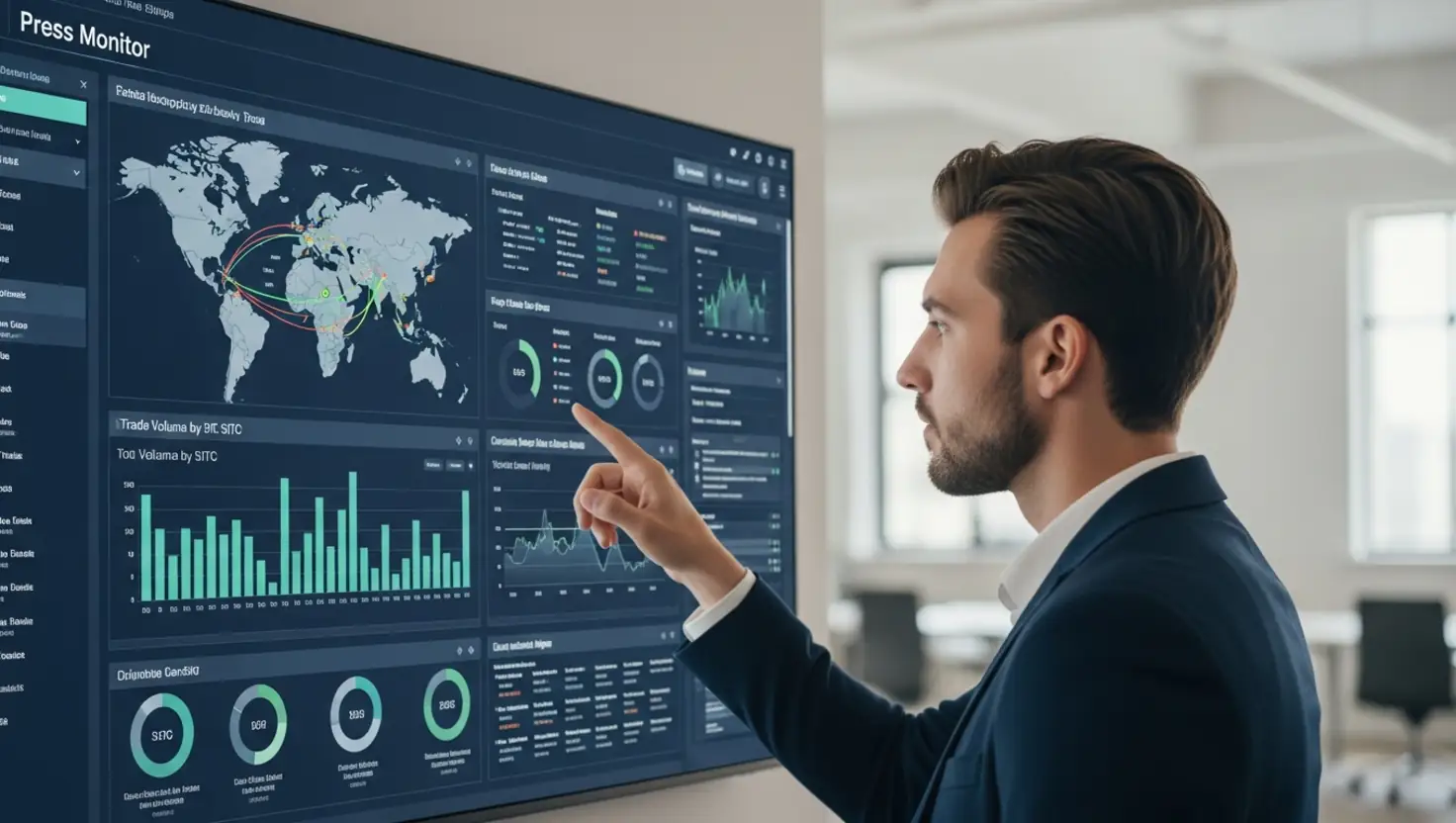
Trade dashboards that compare news flow across product groups and countries.
Macroeconomic research linking market developments to SITC-coded trade categories.
Export promotion and market-entry workflows by product family.
AI agents that summarize what is changing in a trade category across regions.

How It Works

Choose the SITC code relevant to the trade category you want to monitor.
Retrieve headlines, briefs, or full text and add boolean filters when you need to narrow the scope.
Filter by geography or language, then route the results into dashboards, reports, or AI workflows.

AI and MCP Workflows

Use MCP so AI agents can fetch SITC-coded news before preparing macro trade notes or market summaries.
Combine SITC categories with countries, companies, ports, and HS codes for richer analysis.
Automate international trade intelligence for research and export products.

Frequently Asked Questions

How is SITC different from HS? SITC is especially useful for statistical and macro trade analysis, while HS is more central to operational customs and tariff workflows.
Can I use this for export research? Yes. That is a strong fit.
Can AI agents summarize category changes across markets? Yes. MCP access supports that directly.

Getting Started

Start with the SITC categories that define your trade research, export, or market-intelligence workflow. Then choose headlines, briefs, or full text depending on the depth required. API, MCP, and web app access are included. Each headline costs 1 credit, each brief costs 2 credits, and each full text result costs 5 credits. If you monitor trade categories on an ongoing basis, the annual plan gives better value because you pay for only 10 months and receive 12 months of access, which means 2 months free.

Pricing

Pricing

Credit-based pricing with different rates for headlines, briefs, and full-text articles.

Tier Credits Price Overage Cost Action
Micro 200
USD 25/mo
USD 0.15/credit
Starter 1,000
USD 100/mo
USD 0.12/credit
Business 4,000
USD 250/mo
USD 0.08/credit
Enterprise 20,000
USD 750/mo
USD 0.05/credit
Pricing Explanation

Pricing Explanation

Credit-based pricing with different rates for headlines, briefs, and full-text articles.

How Pricing Works

Credit Usage

Credits are consumed based on the type of content you receive:

Headlines:1 credit per article
Briefs (summaries):2 credits per article
Full Text:5 credits per article

How It Works

  • Each plan includes a monthly credit allowance
  • Credits are consumed when articles are delivered
  • Choose the content depth that matches your needs
  • Unused credits do not roll over to the next month

Plan Features Comparison

FeatureMicroStarterBusinessEnterprise
Number of Queries131030
Email Recipients1520100
Webhooks131020
Portfolio Companies11040200

Pro Tip: Start with headlines to maximize your credit usage, and upgrade to briefs or full text for topics that need deeper analysis.