newsmax-2's Power Capsule: The Day's Top Political, Business, and Security Stories Explained


Lead: A day of seismic political shifts, economic tremors, and security crises dominated global headlines. From King Charles III’s historic address to Congress to the escalating Iran standoff, the world watched as alliances frayed and domestic tensions flared. Meanwhile, oil markets roiled amid OPEC upheaval, and the White House grappled with fresh assassination threats. Here’s what you need to know.
The day’s coverage revealed a world at a crossroads: geopolitical tensions simmered as Iran’s nuclear ambitions collided with U.S. military threats, while King Charles III’s address to Congress underscored the fragility of the U.S.-UK ‘special relationship.’ At home, the White House ballroom controversy exposed deep divisions over security and funding, and a sweeping federal raid in Minnesota targeted Medicaid fraud amid political recriminations. These stories weren’t just headlines—they were tectonic shifts in the global and domestic landscape.
Top Political News, Issues and People
King Charles III’s Address: A Diplomatic Earthquake
King Charles III’s address to a joint session of Congress was more than a ceremonial moment—it was a geopolitical earthquake. The speech, delivered amid strained U.S.-UK relations, emphasized ‘unity and shared values’ but left analysts divided over its impact. King Charles III’s Speech and U.S.-UK Relations [385.328s] dissected the address, highlighting its historical significance and the diplomatic tensions that simmered beneath the surface. The segment noted how the King’s remarks on ‘natural heritage’ and ‘shared values’ clashed with the realities of a fractured transatlantic alliance.
The coverage evolved from live reporting to post-speech analysis, with Post-Speech Analysis of King Charles III’s Address [379.67s] dissecting the speech’s diplomatic tone and the reactions from political analysts. King Charles III Address to Congress: Live Coverage [198.281s] provided real-time insights into the event, while King Charles III’s First U.S. Visit: Political Controversies and Historical Context [62.82s] explored the controversies surrounding the King’s comments on faith and his comparisons to Queen Elizabeth II’s response to 9/11. The segment also touched on the political backlash to his visit, including comparisons to Mikhail Gorbachev’s nuclear disarmament rhetoric.
Press Monitor Clips: King Charles III Joint Session of Congress Speech; Analysis of King Charles III’s Speech and U.S.-UK Relations; Post-Speech Analysis of King Charles III’s Address
White House Ballroom Controversy: Security vs. Politics
The White House’s decision to fund a $400 million ballroom project using private donations—amid assassination threats against President Trump—sparked a firestorm. White House Ballroom Project and Political Security [167s] analyzed the national security implications, with panelists debating whether private funding for high-profile events compromised security. The segment also explored the legal challenges facing the project, including a DOJ legal action on White House ballroom construction [108.725s] update that raised questions about federal oversight.
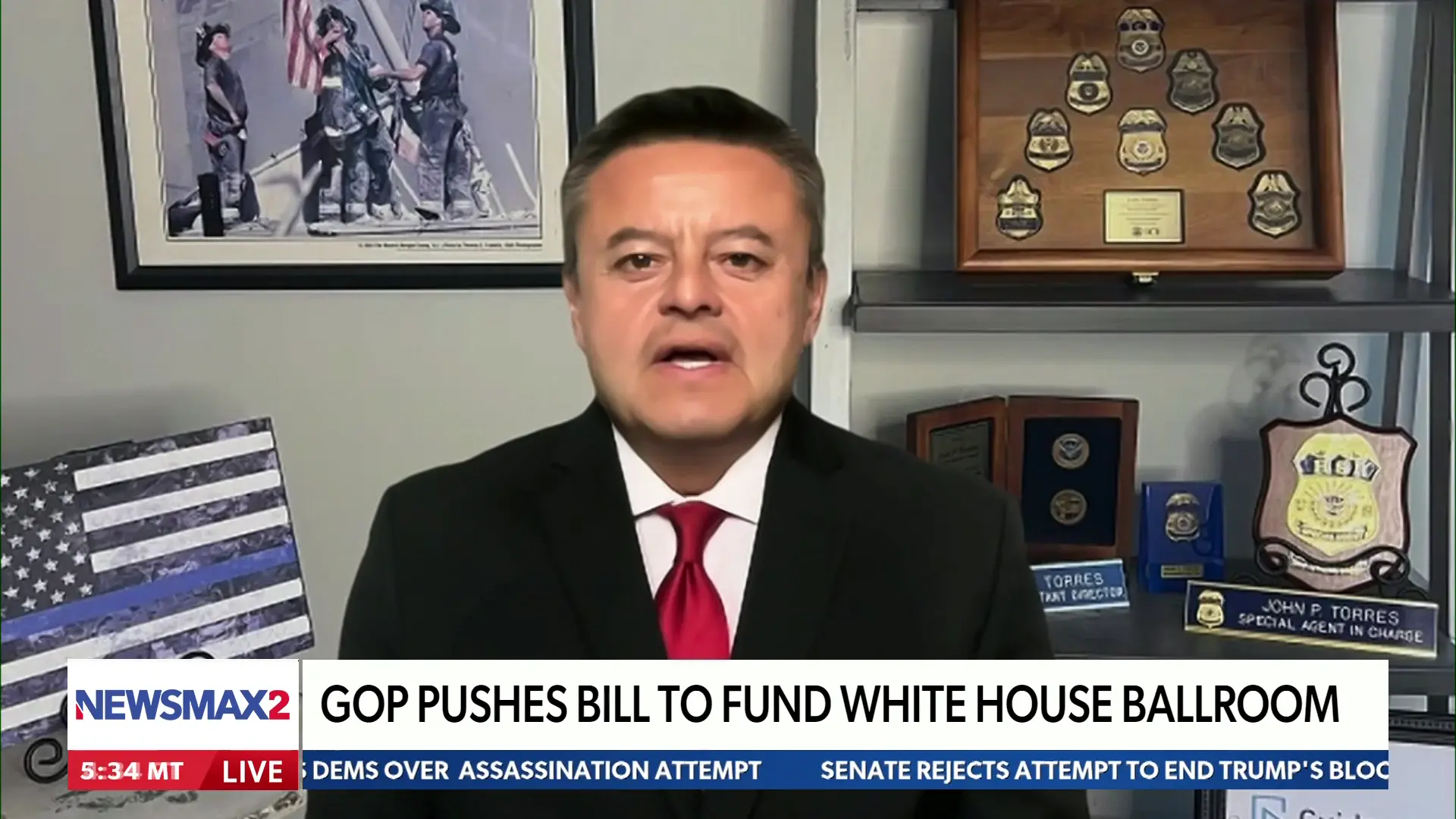
The controversy deepened with Assessment of Recent Assassination Attempts and Security Measures [39.42s], a panel discussion featuring former Acting ICE Director John Torres and former Georgia Congressman Jack Kingston. The segment scrutinized the ‘third attempt’ on Trump’s life and the need for enhanced security at the White House, including the ballroom project. DOJ legal action on White House ballroom construction [108.725s] provided a breaking update on the legal efforts to secure the project, while Analysis of U.S.-Iran Military Deadline and Congressional Concerns [28.452s] tied the controversy to broader national security debates.
Press Monitor Clips: White House Ballroom Project and Political Security; DOJ legal action on White House ballroom construction; Assessment of Recent Assassination Attempts and Security Measures
Iran Standoff: Nuclear Threats and Military Deadlines
The 60-day military deadline for U.S. action in Iran dominated headlines, with Analysis of U.S.-Iran Military Deadline and Congressional Concerns [28.452s] dissecting President Trump’s authority under the War Powers Act. The segment explored the constitutional challenges to the Act and the implications of Iran’s nuclear ambitions, including its uranium enrichment and missile programs. Iran War and Nuclear Diplomacy Analysis [104.763s] provided a broader context, analyzing Trump’s claims about Iran’s ‘collapse’ and the impact on global oil markets.
The coverage expanded to include Iran-U.S. standoff analysis [34.978s], a breaking news segment that tied the standoff to Trump’s claims about Iran’s nuclear threats and the Strait of Hormuz. Final Iran nuclear discussion [369.404s] offered a comprehensive analysis of the negotiations, Trump’s stance, and potential military responses. The segment also highlighted the role of OPEC dynamics, with OPEC Dynamics and Global Energy Market Analysis [290.358s] exploring how the UAE’s departure from OPEC could reshape global oil markets.
Press Monitor Clips: Analysis of U.S.-Iran Military Deadline and Congressional Concerns; Iran War and Nuclear Diplomacy Analysis; Final Iran nuclear discussion
Federal Fraud Probe in Minnesota: Political Fallout
A sweeping federal raid of Minnesota businesses receiving Medicaid funds—targeting five autism centers and others suspected of fraud—unleashed a political firestorm. Federal Fraud Probe in Minnesota Medicaid Programs [14.626s] reported on the raids, which followed claims by Minnesota Governor Tim Walz that the investigations were politically motivated. The segment also featured Interview with Legal Expert on Fraud Investigations [12.737s], where a legal expert dismissed Walz’s claims as politically driven.
The story evolved into a broader discussion of Radicalization and Political Violence Discussion [544.376s], which tied the Minnesota probe to concerns about educational indoctrination and the role of social media in fostering extremism. The segment concluded with calls for educational reform and a focus on basic literacy, highlighting the intersection of politics, law, and social issues.
Press Monitor Clips: Federal Fraud Probe in Minnesota Medicaid Programs; Interview with Legal Expert on Fraud Investigations; Radicalization and Political Violence Discussion
James Comey Indictment: Weaponizing the FBI?
The indictment of former FBI Director James Comey for threatening the president and transmitting threats via social media dominated political coverage. James Comey Interview Segment 3: North Carolina Indictment Analysis [104.701s] provided a breaking analysis of the indictment, including venue selection and legal precedents. The segment also explored the broader implications of the case, including Comey’s past legal history and the political weaponization of the FBI.
The coverage expanded with James Comey Interview Segment 4: Legal and Political Analysis [463.58s], which dissected the venue selection, legal strategies, and media reactions. James Comey Interview Segment 1: Initial Questions [16.214s] offered an exclusive interview, while James Comey Indictment and Political Weaponization [57.045s] tied the indictment to the weaponization of the FBI against Trump. The segment also included Political analysis and accountability discussion [180.516s], which referenced FBI investigations, legal proceedings, and conspiracy theories.
Press Monitor Clips: James Comey Interview Segment 3: North Carolina Indictment Analysis; James Comey Interview Segment 4: Legal and Political Analysis; James Comey Interview Segment 1: Initial Questions
Top Business News, Issues and People
OPEC Upheaval: UAE’s Exit and Oil Market Chaos
The United Arab Emirates’ unexpected departure from OPEC sent shockwaves through global oil markets. OPEC Dynamics and Global Energy Market Analysis [290.358s] explored the implications, including the potential for increased oil production flexibility and economic benefits for the UAE and U.S. The segment also analyzed how the move could reshape OPEC’s cartel dynamics and impact oil prices.
Breaking News: Oil Market Impact [9.355s] provided real-time analysis of the UAE’s exit, while UAE leaving OPEC and Iran nuclear deal implications [103.007s] tied the move to broader geopolitical shifts. Oil price volatility and global economic impact [116.579s] warned that crude oil prices could exceed $120/barrel due to refinery costs, with Goldman Sachs cautioning of further increases. The segment also highlighted the ripple effects on global economies, particularly in Asia, Central Europe, and Africa.
Press Monitor Clips: OPEC Dynamics and Global Energy Market Analysis; Breaking News: Oil Market Impact; UAE leaving OPEC and Iran nuclear deal implications
Iran Nuclear Diplomacy: Economic Pressure and Military Threats
President Trump’s strategy on Iran—combining economic pressure with military threats—dominated business and geopolitical coverage. Iran Negotiations and Economic Pressure: Trump’s Strategy and Analysis [286.857s] provided an in-depth analysis of the blockade, oil production, and the potential outcomes of negotiations. The segment also explored the role of the Strait of Hormuz and the implications for global energy markets.
Iran War and Nuclear Diplomacy Analysis [104.763s] tied the negotiations to broader geopolitical tensions, including the UAE’s departure from OPEC and the impact on oil markets. The segment also highlighted the role of the Concerned Veterans for America and Power the Future organizations in shaping Trump’s strategy.
Press Monitor Clips: Iran Negotiations and Economic Pressure: Trump’s Strategy and Analysis; Iran War and Nuclear Diplomacy Analysis; OPEC Dynamics and Global Energy Market Analysis
Federal Reserve and Economic Policy: Rate Cuts Loom
The Federal Reserve’s upcoming meeting on interest rates dominated economic discussions. Federal Reserve interest rate meeting preview [11.674s] speculated on potential rate cuts, contextualized within broader economic concerns including inflation and economic weakness. Federal Reserve and Economic Policy [24.943s] featured Tracy Burns of Leventhal Global Advisors discussing market expectations and the implications for the economy.
Economic Market Update [55.483s] covered oil prices, stock market trends, and broader economic signals, including AI stocks and Nasdaq performance. The segment also included Economic Impact of Government Shutdown [72.042s], which analyzed the consequences of government shutdowns on consumer sentiment and the middle class.
Press Monitor Clips: Federal Reserve interest rate meeting preview; Federal Reserve and Economic Policy; Economic Market Update
Republican Midterm Strategy: Inflation and Fundraising
Joe Grutter, Chair of the Republican National Committee, outlined the party’s midterm strategy amid high inflation, gas prices, and approval ratings. Republican National Committee Chair Joe Grutter on Midterm Strategy and Economic Challenges [75.727s] emphasized fundraising success, candidate strength, and Trump’s barnstorming approach to specific districts. The segment also highlighted the role of the Concerned Veterans for America and Power the Future organizations in shaping the GOP’s economic message.
Press Monitor Clips: Republican National Committee Chair Joe Grutter on Midterm Strategy and Economic Challenges; Economic Market Update; Federal Reserve and Economic Policy
Top Sports News, Issues and People
Mark Spitz: Olympic Legend and Humorous Competitor
Mark Spitz’s Olympic legacy took center stage with Mark Spitz: Humor and Competitive Mindset [86.004s], which explored his humorous approach to competition and training techniques. The segment also featured Mark Spitz: Olympic Swimming Legend [48.664s], which covered his record-breaking performances and the impact of his victories on American sports during the Vietnam War era.
Press Monitor Clips: Mark Spitz: Humor and Competitive Mindset; Mark Spitz: Olympic Swimming Legend
Other Top News, Issues and People
White House Correspondents’ Dinner Shooting: Radicalization and Security Failures
The shooting at the White House Correspondents’ Dinner—linked to Cole Thomas Allen, a radicalized individual—dominated the ‘other news’ category. White House Correspondents' Dinner Shooting: Cole Thomas Allen Investigation [81.617s] provided an exclusive report on Allen’s background, online radicalization, and the FBI investigation. The segment also analyzed his manifesto and legal history, tying the incident to broader concerns about political radicalization and security failures.
Analysis of Cole Thomas Allen's Motivations and Security Failures [103.497s] delved deeper into the shooter’s motivations and the security lapses at the Washington Hilton. Security Measures for High-Profile Events: White House Hilton Debate [336.288s] sparked a debate on whether the Hilton should host high-profile events, given the recent shooting. The segment also explored the role of political rhetoric in fueling extremism and the potential risks of such events.
Press Monitor Clips: White House Correspondents' Dinner Shooting: Cole Thomas Allen Investigation; Analysis of Cole Thomas Allen's Motivations and Security Failures; Security Measures for High-Profile Events: White House Hilton Debate
Assassination Culture and Political Rhetoric
The escalating ‘assassination culture’ dominated discussions, with Trump-Related Assassination Culture Claims and Comey Indictment [18.785s] analyzing Trump’s rhetoric about Liz Cheney and other figures. The segment contrasted violent rhetoric with age-related jokes, exploring the impact of such statements on extremist behavior. Jimmy Kimmel's Critique of His Own Show and ABC's Response [107.708s] tied the controversy to ABC’s ratings decline and the FCC’s potential license review, highlighting the role of media bias and political violence.
Analysis of White House Ballroom Controversy and Political Rhetoric [118.291s] tied the ballroom project to broader concerns about security at private events and the political implications of private funding. The segment also explored the contrasting stances of Democrats and Republicans on the issue.
Press Monitor Clips: Trump-Related Assassination Culture Claims and Comey Indictment; Jimmy Kimmel's Critique of His Own Show and ABC's Response; Analysis of White House Ballroom Controversy and Political Rhetoric
Gen Z Aesthetic Trends: ‘Mogging’ and Beauty Standards
A lighter but no less fascinating story emerged with Gen Z Aesthetic Trends Panel [93.566s], which explored the ‘mogging’ trend and related beauty standards among Gen Z conservatives. The segment discussed skincare, eyebrows, and body image, offering a glimpse into the cultural shifts shaping younger generations.
Press Monitor Clips: Gen Z Aesthetic Trends Panel
Historical Context: Civil War and Civil Rights Movements
Historical context: Civil War and civil rights movements [394.197s] provided a deep dive into Abraham Lincoln’s Emancipation Proclamation, Rosa Parks’ role in the civil rights movement, and broader themes of social justice. The segment tied these historical events to contemporary debates, highlighting the enduring struggle for equality.
Press Monitor Clips: Historical context: Civil War and civil rights movements
Why These Stories Matter
Today’s coverage wasn’t just a snapshot of the news—it was a revelation of the forces shaping our world. King Charles III’s address to Congress underscored the fragility of the U.S.-UK alliance, while the Iran standoff highlighted the intersection of nuclear diplomacy and economic pressure. At home, the White House ballroom controversy exposed the tension between security and politics, and the Minnesota Medicaid fraud probe revealed the intersection of law, politics, and social welfare.
In business, the OPEC upheaval and Iran negotiations demonstrated how geopolitical tensions can ripple through global markets, while the Federal Reserve’s potential rate cuts loomed over economic forecasts. And in the ‘other news’ category, the White House Correspondents’ Dinner shooting and the rise of ‘assassination culture’ underscored the growing polarization and radicalization shaping American politics.
These stories weren’t just headlines—they were signals of deeper shifts. The question now is: How will policymakers, businesses, and citizens respond to these tectonic changes?

Industry Solutions