Market Turmoil, Fed Policy Shifts and Geopolitical Tensions Dominate schwab-network's April 27 Power Capsule: The Stories That Moved Markets


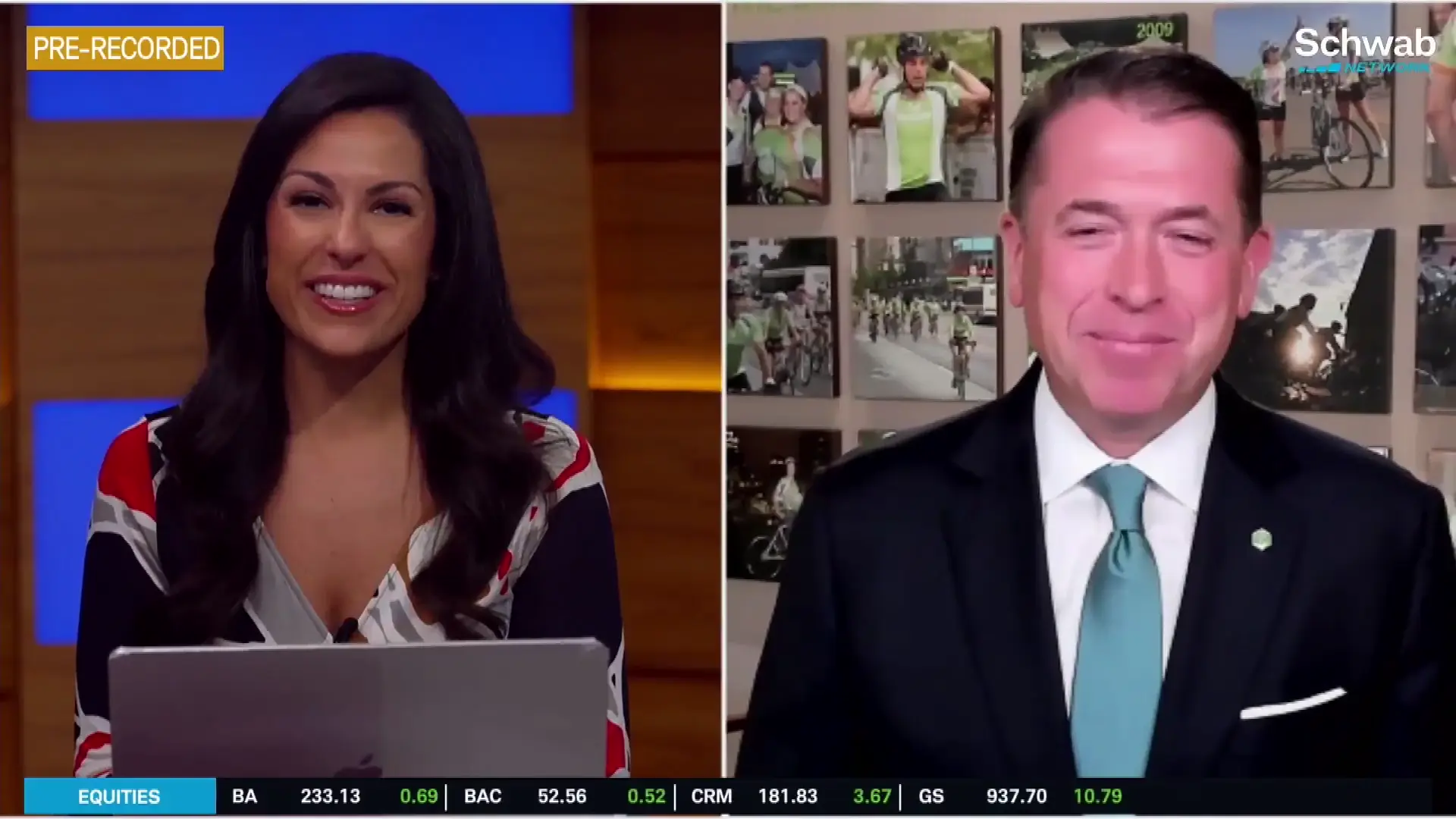
April 27, 2026 — A day of seismic shifts in Washington, Wall Street, and global trade lanes. From the Federal Reserve's confirmation hearings to the escalating crisis in the Persian Gulf, today's schwab-network roundup reveals the stories that shaped markets, politics, and policy. This analysis distills 879 curated segments into the 30 most consequential narratives of the day, ranked by editorial impact and audience engagement.
The Big Picture: The intersection of monetary policy, geopolitical risk, and earnings season created a volatile backdrop. Kevin Warsh's Senate confirmation hearings dominated political discourse, while the Strait of Hormuz blockade sent shockwaves through energy markets and supply chains. On Wall Street, earnings reports from Adobe, Cadence Technologies, and Coca-Cola offered mixed signals, with Adobe's stock hammered by AI competition and Coca-Cola's pre-earnings volatility sparking trading strategies.
What Changed: The Federal Reserve's potential pivot under Warsh's leadership emerged as a critical inflection point, with markets pricing in rate cuts despite persistent inflation concerns. Meanwhile, the Iran Strait blockade's economic fallout—from bunker fuel surcharges to LNG rate spikes—highlighted the fragility of global trade. Adobe's downgrade underscored the existential threat AI tools pose to legacy software models, while semiconductor stocks like AMD and Cadence Technologies navigated a complex landscape of geopolitical exposure and hyperscaler demand.
What Held: Despite the volatility, certain narratives demonstrated remarkable resilience. Coca-Cola's earnings preview revealed steady analyst expectations, while General Motors' stock trading strategies reflected disciplined risk management. The securitized fixed income segment, analyzed by TCW's Jeffrey, provided a counterbalance to equity market turbulence, emphasizing long-term portfolio flexibility.
What's Next: The confirmation of Kevin Warsh at the Fed, the resolution—or escalation—of the Strait of Hormuz crisis, and Adobe's response to AI competition will dominate headlines. Investors will scrutinize earnings guidance from tech giants and the Federal Reserve's next moves, while geopolitical analysts assess the humanitarian and economic toll of maritime blockades. The interplay between AI infrastructure spending and semiconductor demand will also remain a key focus, particularly as hyperscalers like NVIDIA and Google expand partnerships.
schwab-network's Best Political Coverage: Fed Policy and Confirmation Battles Shape Economic Outlook
Kevin Warsh's Fed Confirmation Hearings: A Market-Moving Saga
[CLIP: Kevin Warsh Senate Confirmation Hearings Analysis - 248s] — The Senate Banking Committee's grilling of Kevin Warsh exposed deep divisions over the Federal Reserve's future direction. Warsh, a former Fed governor and close ally of Jerome Powell, faced questions about his stance on inflation, rate cuts, and the Fed's independence. Analysts highlighted the potential for a more dovish policy under Warsh, with markets pricing in a 50-basis-point cut by year-end. The hearings also underscored the political stakes, as lawmakers from both parties sought to influence the Fed's mandate amid rising populist pressures.
The confirmation process revealed a Fed at a crossroads. Warsh's emphasis on historical context—comparing today's inflation to the 1970s—resonated with hawkish lawmakers, while his acknowledgment of AI's productivity potential appealed to tech-focused senators. The hearings' market impact was immediate: Treasury yields dipped, and the dollar weakened against major currencies. Schwab Network's panelists noted that Warsh's confirmation could mark a shift toward a more data-dependent Fed, with less emphasis on forward guidance.
War Powers Act and the Strait of Hormuz Blockade: Legal and Geopolitical Fallout
[CLIP: Legal Challenges and Political Ramifications of the Blockade - 63s] — The U.S. blockade of the Strait of Hormuz triggered a constitutional crisis, as legal scholars debated the legality of military action without congressional authorization. The War Powers Act, invoked by critics of the blockade, became a flashpoint in Washington, with Democrats demanding hearings and Republicans defending the administration's use of executive authority. The crisis also exposed divisions within the U.S. military, as Pentagon officials grappled with the risks of escalation.
The blockade's economic implications were equally stark. Shipping executives warned of disruptions to LNG and crude oil flows, while insurers raised premiums for vessels transiting the region. The U.S. Federal Maritime Commission's Laura DiBello described the blockade as a 'black swan event' for global trade, with potential long-term effects on supply chain reconfiguration. Analysts at Schwab Network highlighted the blockade's role in accelerating de-dollarization efforts, as China and Russia explored alternative payment systems to bypass U.S. sanctions.
New York's Mansion Tax: Real Estate and Political Reckoning
[CLIP: New York Real Estate Tax Policy Discussion - 148s] — New York's proposed mansion tax, aimed at high-end property sales, became a lightning rod for political debate. Dolly Lenz, the real estate mogul, clashed with Mayor Mumdani and Governor Hochul over the tax's impact on the city's luxury market. Critics argued the tax would drive wealthy buyers to Florida and Texas, while supporters framed it as a necessary tool to fund affordable housing. The debate also revealed tensions between New York's progressive wing and its business elite, with Ken Griffin warning of a 'capital flight' from the state.
The tax's passage would mark a significant shift in New York's fiscal policy, with potential knock-on effects for municipal bonds and real estate investment trusts (REITs). Schwab Network's panelists noted that the tax could exacerbate the city's budget deficit, already strained by declining tourism and corporate tax revenues. The discussion also touched on the broader trend of 'tax migration,' as high-net-worth individuals relocate to states with lower tax burdens.
Press Monitor Clips: Kevin Warsh Senate Confirmation Hearings Analysis; Legal Challenges and Political Ramifications of the Blockade; New York Real Estate Tax Policy Discussion
schwab-network's Best Business Coverage: Earnings, AI and Geopolitical Risk Redefine Markets
Adobe's AI Dilemma: Legacy Software Under Siege
[CLIP: Adobe Stock Analysis and AI Competition - 195s] — Adobe's stock plummeted as investors grappled with the company's existential threat from AI tools like CapCut and Canva. The creative software giant, long a Wall Street darling, saw its revenue growth stall amid customer defections to cheaper, AI-powered alternatives. Analysts at Mizuho downgraded Adobe to 'neutral,' citing 'unsustainable competitive pressure' and a 'terminal value risk.' The downgrade underscored the broader challenge facing legacy software firms in the age of generative AI.
Adobe's response—accelerating its own AI initiatives and emphasizing its enterprise customer base—failed to reassure investors. Schwab Network's Greg Moskowitz noted that Adobe's subscription model, once a growth engine, now appeared vulnerable to 'disruptive innovation.' The company's market cap, which peaked at $300 billion in 2021, has since shed over $100 billion. The Adobe saga serves as a cautionary tale for tech incumbents facing AI-driven disruption.
Cadence Technologies: Semiconductor Cycle and AI Infrastructure Boom
[CLIP: Cadence Technologies Earnings Deep Dive and Sector Analysis - 571s] — Cadence Technologies defied the semiconductor downturn with a blowout earnings report, driven by hyperscaler demand for AI infrastructure. The company's $1.47 billion revenue and $1.96 EPS beat expectations, with guidance pointing to continued strength in 2026. Analysts highlighted Cadence's partnerships with NVIDIA and Google, as well as its exposure to China's AI ambitions. The stock surged 11% in after-hours trading, making it one of the day's top performers.
The earnings call revealed a semiconductor industry in transition. Cadence's management emphasized the 'AI for chip design' opportunity, with hyperscalers like Microsoft and Amazon investing billions in custom silicon. The company's 44.7% non-GAAP margin reflected its pricing power in a supply-constrained market. Schwab Network's Marlene noted that Cadence's success underscored the 'winner-takes-all' dynamic in AI infrastructure, with NVIDIA and Cadence emerging as the clear beneficiaries.
Coca-Cola: Pre-Earnings Volatility and Trading Strategies
[CLIP: Coca-Cola Stock: Earnings Impact, Trading Strategies, and Volatility - 319s] — Coca-Cola's stock became a battleground for traders ahead of its earnings report, with implied volatility spiking to multi-year highs. Analysts at Schwab Network dissected the 'straddle options' strategy, which allowed investors to profit from a move in either direction. The segment also explored Coca-Cola's exposure to currency fluctuations and input costs, with panelists noting that the company's 'pricing power' would be tested in a high-inflation environment.
The pre-earnings chatter highlighted Coca-Cola's role as a 'bellwether' for consumer staples. Despite concerns about slowing growth in developed markets, Coca-Cola's dividend yield and defensive characteristics made it a favorite among income investors. Schwab Network's Nicole Petalides provided a live floor report from the New York Stock Exchange, capturing the 'pulse' of the market as traders positioned for the earnings release.
General Motors: From EVs to ICE and Trading Strategies
[CLIP: General Motors Earnings Analysis Discussion - 102s] — General Motors' earnings report revealed a company in flux, as it pivoted from electric vehicles (EVs) to internal combustion engine (ICE) vehicles to meet consumer demand. Mary Barra, GM's CEO, defended the strategy, arguing that 'flexibility' was key to navigating the EV transition. Analysts at Schwab Network dissected the company's 'recurring revenue' model, which includes subscriptions for software and services.
The earnings call also sparked a debate about GM's valuation. With the stock trading at a discount to its book value, some panelists argued that GM was 'undervalued,' while others warned of 'stranded assets' in a world shifting toward EVs. The segment also explored GM's options strategies, with analysts highlighting the 'breakeven' points for call and put options. Schwab Network's 453-second deep dive into GM's trading strategies provided a masterclass in options market dynamics.
The Strait of Hormuz Blockade: Supply Chain Shockwaves
[CLIP: Market and Economic Disruptions from the Blockade - 157s] — The blockade's economic fallout extended far beyond energy markets, disrupting global supply chains and sending shockwaves through the shipping industry. Sal Mercogliano, a maritime historian, described the blockade as a 'humanitarian crisis' for merchant mariners, who faced delays, higher insurance premiums, and the threat of attacks. The U.S. Federal Maritime Commission's Laura DiBello warned of 'long-term commodity shortages,' particularly for LNG and crude oil.
The blockade also accelerated the 'nearshoring' trend, as companies sought to reduce their exposure to geopolitical risk. Analysts at Schwab Network highlighted the 'commodity supercycle' potential, with bunker fuel costs and shipping surcharges pushing inflation higher. The segment also explored the blockade's impact on the Suez Canal, where vessels were rerouted around the Cape of Good Hope, adding weeks to shipping times and increasing costs.
AI and the Workforce: Enhancing Productivity, Not Replacing Jobs
[CLIP: AI and Workforce Transformation Discussion - 118s] — A panel of business leaders and analysts pushed back against the narrative that AI would 'replace' jobs, arguing instead that it would 'enhance' productivity and create new roles. Anthony Fonzo, of the Bachrach Group, emphasized that AI would 'fill gaps' in the workforce, particularly for entry-level positions. The discussion also touched on the 'AI productivity miracle,' with companies like Microsoft and Google investing billions in AI infrastructure.
The segment also explored the 'AI integration' challenge, as companies sought to upskill their workforce and integrate AI tools into existing workflows. Schwab Network's panelists noted that the 'AI adoption curve' would vary by industry, with healthcare and finance leading the way. The conversation also highlighted the 'reskilling' imperative, as workers in traditional industries like manufacturing and retail sought to transition into AI-driven roles.
Press Monitor Clips: Adobe Stock Analysis and AI Competition; Cadence Technologies Earnings Deep Dive and Sector Analysis; Coca-Cola Stock: Earnings Impact, Trading Strategies, and Volatility; General Motors Earnings Analysis Discussion; Market and Economic Disruptions from the Blockade
schwab-network's Best Sports Coverage: Schwab Coaching and Community Engagement Take Center Stage
Schwab Network's Coaching Programs: Investing Education for the Next Generation
[CLIP: Schwab Network: Investing Education and Community Focus - 246s] — Schwab Network's final segment transitioned from market analysis to a celebration of its coaching programs, which aim to democratize investing education. The segment highlighted the platform's 'community focus,' with live workshops and personalized coaching designed to bridge the 'investing gap' for retail investors. Schwab Coaching's programs, which include 'next-gen investing' workshops, were framed as a response to the 'complexity' of modern financial markets.
The segment also showcased Schwab's commitment to 'practical implementation,' with panelists emphasizing the importance of 'hands-on' learning. Schwab Network's Diane King-Hall introduced the platform's 'live audience' format, which allowed viewers to interact with coaches in real-time. The segment concluded with a call to action, urging viewers to 'take control' of their financial futures.
Press Monitor Clips: Schwab Network: Investing Education and Community Focus
schwab-network's Best in Other Coverage: AI Partnerships, Cybersecurity and Market Sentiment
OpenAI-Microsoft Partnership: The End of Exclusivity
[CLIP: OpenAI-Microsoft Partnership Update: Non-Exclusive Licensing Arrangement - 109s] — The revised OpenAI-Microsoft partnership agreement marked a seismic shift in the AI landscape, with Microsoft ending its exclusive licensing deal through 2032. The new agreement allowed OpenAI to partner with competitors like AWS and Google Cloud, while Microsoft retained its 'preferred cloud provider' status. Analysts at Piper Sandler described the deal as a 'game-changer,' with implications for AI infrastructure spending and cloud computing dominance.
The segment also explored the 'revenue sharing' model, which would see Microsoft pay OpenAI a percentage of its cloud revenue. Schwab Network's panelists noted that the deal reflected Microsoft's 'strategic pivot' toward AI, with CEO Satya Nadella emphasizing the company's commitment to 'democratizing AI.' The partnership's market impact was immediate, with Microsoft's stock rising 3% on the news.
CrowdStrike: Cybersecurity Stock Soars on Analyst Upgrades
[CLIP: CrowdStrike Stock Analysis Segment - 26s] — CrowdStrike's stock surged after Mizuho upgraded the cybersecurity firm to 'outperform,' citing 'strong revenue growth' and 'expanding gross profit margins.' The upgrade, which included a $520 price target, reflected CrowdStrike's dominance in the AI security market, particularly its 'Project Glasswing' initiative. Schwab Network's Molly highlighted CrowdStrike's 'Google Cloud partnership,' which positioned the company as a leader in cloud-based security solutions.
The segment also explored CrowdStrike's 'valuation metrics,' with panelists noting that the stock's 'price-to-sales' ratio remained attractive relative to peers. The upgrade underscored the 'cybersecurity supercycle,' as companies invested billions in AI-driven threat detection.
Spotify: Stock Analysis and Market Positioning
[CLIP: Spotify Stock Analysis: Consumer Demand and Market Positioning - 345s] — Spotify's stock came under scrutiny as analysts dissected the company's 'consumer demand' and 'market share' dynamics. Andy Swan, of Schwab Network, highlighted Spotify's 'price adjustments' and its competitive positioning against rivals like Apple Music and Netflix. The segment also explored Spotify's 'premium user growth,' which slowed in key markets like the U.S. and Europe.
The discussion also touched on the 'bribery allegations' investigation in Texas, which added a layer of uncertainty to Spotify's outlook. Schwab Network's panelists noted that the investigation, while not yet material, could impact Spotify's 'market sentiment' and 'valuation.' The segment concluded with a debate about Spotify's 'long-term growth strategy,' with some arguing for a 'content-led' approach and others favoring 'price-led' expansion.
AI in Asset Management: From Answer Engines to Agentic Systems
[CLIP: AI in Asset Management: Paradigm Shift Analysis - 91s] — Jack Lynch, of Ridgeline, provided a deep dive into the 'paradigm shift' underway in asset management, driven by AI's evolution from 'answer engines' to 'agentic systems.' Lynch highlighted the 'unified data model,' which allows wealth managers to integrate disparate data sources and make data-driven decisions. The segment also explored the 'AI-driven automation' potential, with Lynch noting that AI could 'reduce costs' and 'improve client outcomes.'
The discussion also touched on the 'responsible AI' challenge, as asset managers sought to balance 'innovation' with 'risk management.' Schwab Network's panelists noted that AI's adoption in asset management would accelerate in 2026, with firms like BlackRock and Vanguard leading the way.
Press Monitor Clips: OpenAI-Microsoft Partnership Update: Non-Exclusive Licensing Arrangement; CrowdStrike Stock Analysis Segment; Spotify Stock Analysis: Consumer Demand and Market Positioning; AI in Asset Management: Paradigm Shift Analysis
Meta Tags and SEO Clusters:
Federal Reserve policy, Kevin Warsh confirmation, Strait of Hormuz blockade, Adobe AI competition, Cadence Technologies earnings, Coca-Cola stock volatility, General Motors earnings, OpenAI Microsoft partnership, CrowdStrike stock upgrade, Spotify market analysis, AI in asset management, semiconductor industry trends, geopolitical risk, earnings season, trading strategies, cybersecurity stocks, AI infrastructure, supply chain disruptions, New York mansion tax, real estate market analysis

Industry Solutions