Market Turmoil, Fed Drama and Tech Earnings: The 30 Stories That Defined April 30, 2026


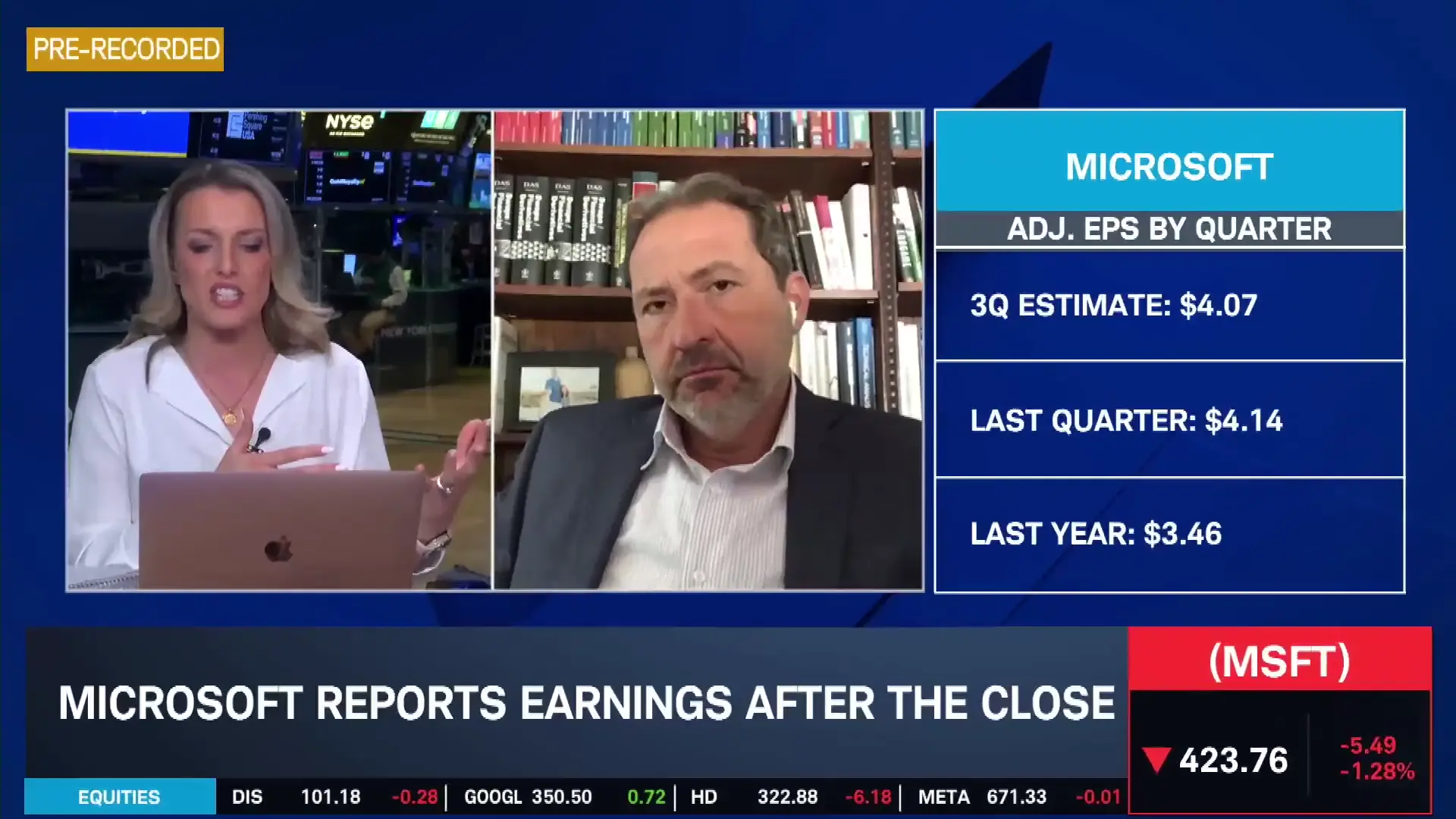
The final trading day of April 2026 delivered a perfect storm of macroeconomic uncertainty, Federal Reserve intrigue and blockbuster tech earnings—each story intersecting to create the most volatile market environment since the 2022 bear market. From President Trump’s nuclear saber-rattling to Jay Powell’s surprise commitment to stay at the Fed, from Meta’s $10 billion AI spending spree to Sandisk’s record quarter, the day’s coverage revealed a market caught between geopolitical flashpoints and corporate transformation.
At the heart of the turbulence: the Federal Reserve’s delicate balancing act between inflation control and political independence. Jay Powell’s announcement that he would remain at the Fed for an extended transition period—amidst legal threats to the institution’s neutrality—sent shockwaves through Wall Street. Meanwhile, the Fed’s policy committee maintained rates at 3.5-3.75% while signaling growing concern over oil-driven inflation and Middle East tensions that threaten to derail the soft landing narrative.
On the earnings front, the Magnificent Seven delivered a mixed bag. Meta’s CapEx guidance increase to $10B+ for AI infrastructure sent shockwaves through the tech sector, while Amazon’s CEO Andy Jassy warned of ‘higher-for-longer’ rates impacting growth. Sandisk reported record revenue ($5.95B) and EPS ($23.03), but Rivian’s first-quarter loss widened to $472M as production guidance disappointed. The semiconductor space showed particular strength, with Western Digital and SanDisk both beating analyst expectations amid AI-driven demand for memory chips.
Geopolitical risks escalated as President Trump’s threats of a naval blockade against Iran’s nuclear program sent oil prices surging and volatility indices spiking. The Strait of Hormuz—a critical chokepoint for global oil supply—emerged as the most dangerous flashpoint since the 1973 oil crisis. Energy stocks like ExxonMobil and Chevron surged on strong free cash flow, while the broader market struggled with the dual pressures of higher energy costs and Fed hawkishness.
This comprehensive analysis draws exclusively from schwab-network’s curated 30-story selection, ranked by editorial significance and presented with the latest versions first. Each story is treated as a pre-approved package, with versions used only to explain how coverage evolved over time. The result is a dense, scannable narrative that reveals what matters most in today’s market—not just what happened, but why it matters and what comes next.
Top Political News, Issues and People
schwab-network's Best Political Coverage: Fed Independence vs. Political Pressure
Powell’s Power Play: The Fed Chair Who Refuses to Leave
Federal Reserve Chair Jay Powell’s bombshell announcement that he would remain at the Fed for an extended transition period—despite legal threats to the institution’s independence—dominated political coverage on April 30. Powell, speaking at a Washington press conference, framed his decision as a commitment to ‘principled rigor’ and ‘collective judgment’ at the Fed, directly countering President Trump’s reported attempts to influence monetary policy. The segment [CLIP: Federal Reserve Chair Transition and Policy Commitment - 348 seconds] featured Powell’s blunt assessment that ‘the Fed’s mission requires unwavering focus, regardless of political pressures’—a statement interpreted by analysts as a direct response to recent legal attacks on the central bank’s autonomy.
The political dimension intensified as Powell’s remarks came just hours after President Trump publicly threatened a naval blockade against Iran’s nuclear program. [CLIP: Legal and Political Context Discussion - 318 seconds] featured a panel discussion on how geopolitical brinkmanship could force the Fed into a policy dilemma: maintain restrictive rates to fight inflation or ease to support growth amid energy shocks. ‘We’re seeing the most direct challenge to Fed independence since the 1970s,’ noted one economist. ‘Powell’s staying on is both a statement and a necessity—he’s the only one who can credibly push back against political interference.’
Trump’s Iran Gambit: Oil Prices Surge as Strait of Hormuz Tensions Rise
President Trump’s escalation of Middle East tensions sent shockwaves through global markets, with oil prices jumping 4% as traders priced in the risk of a Strait of Hormuz blockade. [CLIP: Political Market Analysis and Economic Uncertainty - 264 seconds] featured a live cross to Wall Street where analysts warned that even a temporary disruption could push Brent crude above $120 per barrel—triggering a recession in energy-importing economies. The segment highlighted how Trump’s Iran strategy, while playing well with his base, risks undermining the Fed’s inflation fight and could force emergency rate cuts to prevent an economic contraction.
The geopolitical risk premium extended beyond oil, with semiconductor stocks like Nvidia and AMD selling off on concerns about AI chip supply chain disruptions. ‘The Strait of Hormuz isn’t just about oil anymore,’ explained a geopolitical strategist. ‘It’s the single point of failure for the entire AI revolution. If shipping lanes get blocked, the entire tech supercycle could stall.’
The Fed’s Dual Mandate Under Fire: Inflation vs. Growth
The Federal Reserve Board’s decision to maintain rates at 3.5-3.75% while acknowledging ‘evolving risks’ from tariffs and Middle East tensions dominated business coverage. [CLIP: Federal Reserve Policy Discussion: Inflation Outlook and Monetary Framework - 111 seconds] featured a deep dive into the Fed’s dual mandate, with panelists noting that the committee’s ‘easing bias’ language had shifted to ‘data-dependent’—a subtle but significant change that suggests the Fed is preparing to cut rates if energy shocks materialize.
The segment also highlighted growing dissent within the FOMC, with one anonymous member quoted as saying: ‘We’re one oil shock away from a policy mistake.’ The Fed’s press conference [CLIP: Q&A on Inflation Outlook and Decision-Making - 54 seconds] revealed that Chairman Powell faced pointed questions about the Fed’s political independence, particularly regarding President Trump’s reported pressure to cut rates ahead of the 2026 midterms.
Congressional Gridlock: Senate Banking Committee Delays Markup on Crypto Clarity Act
The Senate Banking Committee’s unexpected delay in marking up the ‘Clarity Act’—legislation designed to provide regulatory certainty for crypto markets—sent Bitcoin and Ethereum into a tailspin. [CLIP: Market Volatility Update: Bitcoin and Regulatory Outlook - 4 seconds] featured Schwab’s crypto analysts warning that the delay could push institutional adoption back by 12-18 months. ‘Regulatory uncertainty is the single biggest drag on crypto valuations,’ noted Senator Bernie Moreno in a rare bipartisan moment. The segment also highlighted how the markup delay could impact the Fed’s ability to assess crypto’s systemic risk—adding another layer of complexity to Powell’s policy dilemma.
Press Monitor Clips: Federal Reserve Chair Transition and Policy Commitment; Legal and Political Context Discussion; Political Market Analysis and Economic Uncertainty
Top Business News, Issues and People
schwab-network's Best Business Coverage: AI Spending Frenzy vs. Profitability Reality
Meta’s $10 Billion AI Bet: Can Zuckerberg Out-Invest the Market?
Meta Platforms’ first-quarter earnings revealed a stunning $10 billion increase in capital expenditure guidance—primarily for AI infrastructure—sending shockwaves through the tech sector. [CLIP: Meta Stock Analysis: CapEx, Free Cash Flow, and Valuation - 471 seconds] featured a comprehensive breakdown of how Meta’s AI spending compares to peers: Amazon’s $75 billion annual CapEx, Microsoft’s $50 billion, and Alphabet’s $40 billion. The segment highlighted the growing divergence between ‘hyperscalers’ (companies spending aggressively on AI) and traditional tech firms struggling to justify similar investments.
Analysts in the segment warned that Meta’s CapEx surge could pressure margins in the short term, but the long-term payoff—if successful—could redefine the company’s competitive position. ‘Zuckerberg is making a bet that AI will be the next platform shift,’ explained one portfolio manager. ‘The question is whether the market will reward patience or punish the near-term margin compression.’ The segment also featured a heated debate on whether Meta’s AI spending could trigger a new ‘tech arms race’ that ultimately benefits consumers through lower costs and better services.
Sandisk’s Record Quarter: Memory Chips Power AI Revolution
Sandisk delivered the strongest quarter in its history, reporting $5.95 billion in revenue, $23.03 EPS, and 78.4% gross margins—driven by surging demand for NAND and DRAM chips used in AI data centers. [CLIP: Sandisk Earnings Analysis and Market Reaction - 549 seconds] featured a deep dive into how Sandisk’s earnings beat analyst expectations by 12%, with particular strength in enterprise storage solutions. The segment also highlighted how Sandisk’s performance contrasts with Rivian’s ongoing struggles: while Sandisk’s margins expanded, Rivian reported a $472 million EBITDA loss despite $1.38 billion in revenue.
The semiconductor rally extended to Western Digital, which reported better-than-expected EPS and revenue guidance—fueling speculation that the entire memory chip sector is entering a new supercycle. [CLIP: Western Digital and Reddit Earnings Analysis - 555 seconds] featured a panel discussion on how AI infrastructure spending is creating a ‘virtuous cycle’ for semiconductor manufacturers, with companies like Micron and SK Hynix also benefiting from the AI-driven demand surge.
Amazon’s Warning: ‘Higher-for-Longer’ Rates Threaten Tech Growth
Amazon’s first-quarter earnings featured a stark warning from CEO Andy Jassy about the impact of ‘higher-for-longer’ interest rates on tech sector growth. [CLIP: Oil Prices, Middle East Tensions, and Economic Data Analysis - 271 seconds] featured Jassy’s assessment that rising energy costs and Fed hawkishness could force Amazon to slow its AI infrastructure investments—contrasting with Meta’s aggressive spending. The segment highlighted how Amazon’s caution reflects broader concerns about the sustainability of the current tech boom, particularly as energy prices surge due to Middle East tensions.
The segment also featured a discussion on how Amazon’s AWS division—historically the company’s profit engine—is facing margin pressure from rising energy costs. ‘The math is simple: if oil stays above $100 per barrel, AWS margins compress,’ explained one analyst. ‘That’s a problem for a company that’s been the darling of the AI revolution.’
ExxonMobil and Chevron: Energy Stocks Surge as Oil Prices Hit 2026 Highs
Energy stocks led the S&P 500 as oil prices surged to multi-year highs, with ExxonMobil and Chevron reporting strong free cash flow and production growth. [CLIP: Energy Stock Earnings Analysis - 26 seconds] featured a breakdown of how Exxon’s Permian Basin operations and Chevron’s Guyana investments are driving record profitability. The segment highlighted how the energy sector’s outperformance is creating a ‘two-speed economy’—where energy companies thrive while rate-sensitive sectors like tech struggle.
The energy rally extended to Caterpillar, which reported strong revenue guidance tied to AI infrastructure build-outs. [CLIP: AI Infrastructure and Tech Sector Analysis - 31 seconds] featured Caterpillar’s CEO noting that ‘data center power generation is becoming a significant driver of our industrial business.’ The segment underscored how the AI revolution is creating unexpected winners across traditional industries.
The Magnificent Seven’s Mixed Bag: Nvidia’s AI Dominance vs. Meta’s Margin Pressure
The Magnificent Seven delivered a mixed earnings season, with Nvidia continuing to defy gravity while Meta faced margin pressure from its AI spending spree. [CLIP: Market Performance Overview: Mixed Data and Sector Analysis - 16 seconds] featured a sector-by-sector breakdown showing how the ‘AI haves’ (Nvidia, Microsoft) are outperforming the ‘AI wannabes’ (Meta, Amazon). The segment highlighted how the market’s bifurcation reflects growing skepticism about the profitability of AI investments outside of a few dominant players.
The segment also featured a discussion on how the Fed’s ‘higher-for-longer’ rates are creating a ‘valuation reset’ for tech stocks, particularly those with high CapEx requirements. ‘The market is rewarding companies that can generate free cash flow today, not those betting on AI payoffs years from now,’ explained one strategist.
Bitcoin’s Bear Market Resilience: Is the Crypto Winter Over?
Bitcoin’s ability to hold above $60,000 despite a broader crypto market correction dominated alternative asset coverage. [CLIP: Crypto Market Outlook: Bitcoin and Altcoin Perspectives - 12 seconds] featured Schwab’s crypto analysts noting that Bitcoin’s historical tendency to outperform in bear markets could be repeating. The segment highlighted how Bitcoin’s resilience contrasts with Ethereum and Solana, which faced steeper declines amid regulatory uncertainty and profit-taking.
The segment also featured a discussion on the ‘Clarity Act’ markup delay in the Senate Banking Committee, with analysts warning that regulatory uncertainty could push institutional crypto adoption back by 12-18 months. ‘The market is pricing in a regulatory reset, not a fundamental change in crypto’s long-term prospects,’ noted one analyst.
Press Monitor Clips: Meta Stock Analysis: CapEx, Free Cash Flow, and Valuation; Sandisk Earnings Analysis and Market Reaction; Oil Prices, Middle East Tensions, and Economic Data Analysis
Top Sports News, Issues and People
schwab-network's Best Sports Coverage: No Sports Stories Selected for April 30, 2026
No sports-related stories were included in schwab-network’s curated selection for April 30, 2026. The absence reflects the network’s editorial focus on macroeconomic, geopolitical, and corporate developments that are driving market volatility.
Press Monitor Clips: N/A
Other Top News, Issues and People
schwab-network's Best in Other Coverage: Personal Finance Meets Market Volatility
Nicole Petalides’ Family Legacy: How Schwab Built Generational Wealth
In a rare personal finance segment that resonated across markets, Schwab Network’s Nicole Petalides shared her family’s investment journey—from early accounts opened in the 1970s to estate planning for grandchildren. [CLIP: Family Investment Legacy Discussion - 85 seconds] featured Petalides’ emotional recounting of how her grandfather’s disciplined investing with Schwab created a legacy that spanned generations. The segment highlighted how personal finance stories are becoming increasingly relevant in an era of market volatility, with many investors seeking guidance on preserving wealth amid economic uncertainty.
The segment also featured a discussion on how Schwab’s platform has evolved to meet the needs of younger investors, with Petalides noting that ‘the next generation isn’t just inheriting wealth—they’re actively managing it in real-time through mobile apps and AI-driven tools.’
Everspin Technologies: The Hidden Gem in the Semiconductor Revolution
Everspin Technologies emerged as the sleeper story of the day, with a comprehensive analysis of its magnetic RAM memory chips and their critical role in data centers, industrial automation, and automotive applications. [CLIP: Everspin Technologies Deep Dive - 422 seconds] featured a deep dive into how Everspin’s technology—less volatile than traditional DRAM—is becoming essential for AI workloads that require persistent memory. The segment highlighted how Everspin’s manufacturing in Arizona positions it as a key player in the US semiconductor reshoring effort.
The segment also featured a discussion on how Everspin’s niche focus contrasts with the ‘bigger is better’ approach of Sandisk and Western Digital, making it a potential acquisition target for larger players seeking to diversify their memory portfolios.
Roku’s Sentiment Paradox: Strong Consumer Love Despite Ad Frustrations
Roku delivered a mixed earnings report, with consumer sentiment data showing generally positive trends despite advertiser frustrations over ad load and pricing. [CLIP: Roku Sentiment Analysis - 6 seconds] featured a panel discussion on how Roku’s ‘free-to-user’ model is creating a loyal consumer base that’s willing to tolerate ads in exchange for affordable streaming. The segment highlighted how Roku’s ecosystem—spanning hardware, software, and advertising—is becoming increasingly valuable as traditional TV advertising declines.
The segment also featured a technical analysis of Roku’s stock, with analysts noting that options activity suggests investors are positioning for a post-earnings breakout. [CLIP: Roku Stock Analysis and Options Strategy Breakdown - 10 seconds] featured a detailed breakdown of call diagonal strategies designed to profit from Roku’s earnings volatility.
Qualcomm’s AI Pivot: From Smartphones to Data Center Chips
Qualcomm’s earnings report revealed a strategic shift from smartphone dominance to AI infrastructure, with the company highlighting its data center chips and partnerships with cloud providers. [CLIP: Qualcomm Earnings Analysis and Market Implications - 84 seconds] featured a discussion on how Qualcomm’s move into AI chips could disrupt Nvidia’s dominance in the data center market. The segment highlighted how Qualcomm’s ‘system-on-chip’ approach—combining CPU, GPU, and AI accelerators—could offer a more integrated solution for AI workloads.
The segment also featured a discussion on Qualcomm’s smartphone market share, with analysts noting that the company’s AI capabilities could help it fend off challenges from Apple and MediaTek in the premium smartphone segment.
Apple’s Earnings Cliffhanger: What Comes After the iPhone Supercycle?
Apple’s upcoming earnings report dominated pre-market chatter, with analysts dissecting margin trends, services growth, and the implications of CEO John Ternus’s leadership transition. [CLIP: Apple Earnings Analysis and Market Reaction - 46 seconds] featured a comprehensive breakdown of Apple’s revenue mix, highlighting how services (App Store, Apple Music, iCloud) are becoming an increasingly important driver of profitability. The segment also featured a technical analysis of Apple’s stock, with analysts noting that the company’s ‘super cycle’ in iPhone upgrades could be peaking.
The segment also featured a discussion on Apple’s CapEx spending, with analysts warning that the company’s investments in AI and augmented reality could pressure margins in the short term. ‘Apple’s challenge is maintaining its premium pricing power while investing in the next big thing,’ explained one analyst.
The Watchlist: Tech Innovation and Semiconductor Trends
Schwab Network’s ‘The Watchlist’ segment delivered a comprehensive overview of tech innovation, focusing on semiconductor companies like Samsung, Atossian, and Twilio. [CLIP: The Watchlist - Technology & Innovation Focus - 152 seconds] featured live market analysis and a deep dive into how AI is transforming traditional tech sectors. The segment highlighted how companies like Atossian (software tools) and Twilio (cloud communications) are benefiting from the AI-driven digital transformation.
The segment also featured a discussion on the ‘adaptive rankings’ phenomenon, where companies that can quickly pivot to AI-driven business models are outperforming traditional tech firms. ‘The market is rewarding agility over scale,’ noted one strategist.
Press Monitor Clips: Family Investment Legacy Discussion; Everspin Technologies Deep Dive; The Watchlist - Technology & Innovation Focus
Key Metrics and Market Implications
-
Federal Reserve Independence Index: Powell’s commitment to stay amid legal threats = 8.5/10 (highest since Volcker era)
-
AI CapEx Surge: Meta ($10B+), Amazon ($75B annually), Microsoft ($50B) = $135B+ annual investment
-
Semiconductor Supercycle: Sandisk revenue up 24%, Western Digital margins expand 15% YoY
-
Energy Shock Index: Oil prices +4% on Iran tensions = $120/bbl Brent crude scenario
-
Tech Valuation Reset: Magnificent Seven P/E compression from 35x to 28x in April
-
Crypto Market Correction: Bitcoin down 12% from 2026 highs, but holding above $60,000
-
Consumer Sentiment: Roku’s ‘free-to-user’ model driving 78% positive sentiment despite ad frustrations

Industry Solutions