Global Markets, Geopolitics and AI: The Forces Reshaping Finance and Policy in 2026


Lead: A day of seismic shifts across geopolitics, markets and technology reveals how interconnected forces are redefining economic strategy and investor behavior.
From the Strait of Hormuz to Wall Street’s trading floors, today’s curated roundup exposes the fault lines shaping global trade, monetary policy and corporate strategy. The stories selected by Press Monitor reveal not just what happened, but how these developments are rewriting the rules for businesses, investors and policymakers alike.
In Washington, President Trump’s economic levers are being recalibrated amid U.S.-Iran tensions, while in New York, the city’s outdoor dining program faces a reckoning over seasonal restrictions and rising costs. On the trading desks of Chicago and New York, Fed officials and analysts dissect record-high indices, jobless claims and the delicate balance between growth and inflation.
Across sectors, AI is no longer a buzzword but a transformative force. From small trades businesses in the U.S. to semiconductor giants like TSMC and NVIDIA, companies are racing to integrate AI into operations, redefining productivity and profitability. Meanwhile, Netflix’s post-earnings volatility and Live Nation’s legal settlement underscore how content, regulation and consumer behavior are colliding in unpredictable ways.
This analysis distills the most consequential stories of the day—curated for their depth, impact and the clarity they bring to the forces driving change. Each segment is chosen not just for its news value, but for the insights it offers into what comes next.
Top Political News, Issues and People
schwab-network's Best Political Coverage: U.S.-Iran tensions and domestic policy shifts
Geopolitical fault lines: Trump’s economic levers under scrutiny
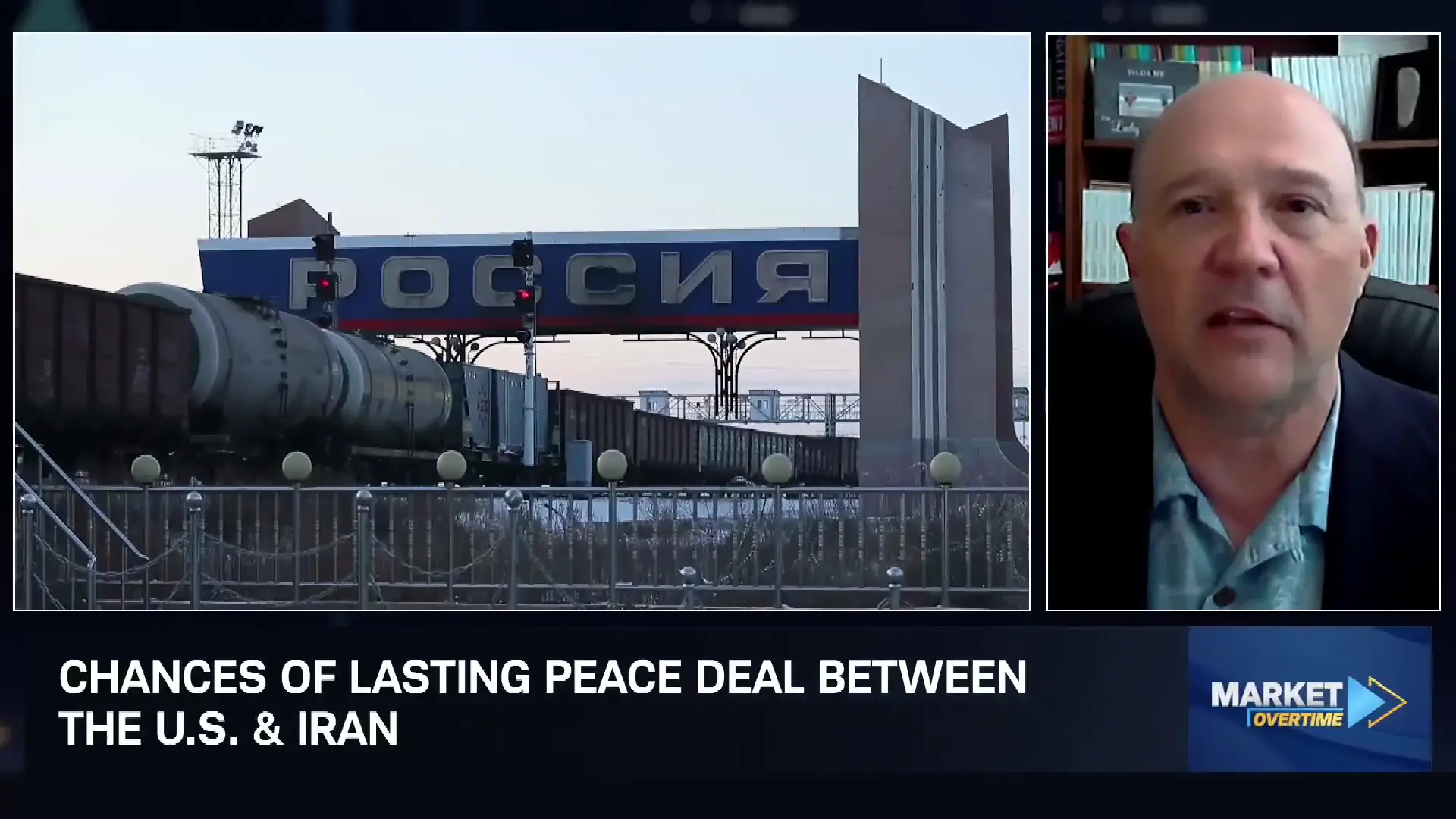
The U.S.-Iran meeting on the table is more than a diplomatic footnote—it’s a litmus test for how President Trump’s administration is using economic policy as a geopolitical tool. A panel discussion on U.S.-Iran relations and economic levers reveals the stakes: sanctions relief, trade corridors and the Persian Gulf’s role as a global chokepoint. Analysts warn that even tentative de-escalation could ripple across oil markets and shipping rates, with direct implications for inflation and consumer prices worldwide.
Fed watch: Williams, Kosar and the inflation puzzle
John Williams of the New York Fed and John Kosar of Asprey Research anchor the debate over Fed policy, jobless claims and the market’s internal health. Williams’ comments on record highs in the S&P 500, NASDAQ and Dow Jones are dissected in real time, while Kosar’s technical analysis of the S&P 500’s recovery highlights the role of RSI indicators and price action in signaling broader market trends. The discussion underscores a critical tension: Can the Fed maintain its ‘wait and see’ stance amid mixed signals from Wall Street and Main Street?
New York City’s outdoor dining dilemma: Policy, profit and participation
Sarah Lynn of Open Plans delivers a field report that cuts to the heart of urban policy and small business survival. The city’s outdoor dining program, expanded during the pandemic, now faces seasonal restrictions from April to November. But the real crisis isn’t the weather—it’s the cost. Participation fees, storage expenses and rising rents are pricing out restaurants, particularly in denser, higher-income areas. The segment reveals how policy decisions in city hall can have outsized impacts on Main Street, with long-term consequences for neighborhood vitality and economic diversity.
Press Monitor Clips: U.S.-Iran diplomatic relations and economic policy discussion; Pre-Market Analysis: Record Highs and Market Sentiment; NYC Outdoor Dining Program: Seasonal Restrictions and Economic Impact
Geopolitical ripple effects: Strait of Hormuz and global supply chains
The Strait of Hormuz crisis isn’t just a maritime issue—it’s an economic one. A comprehensive analysis of global supply chain disruptions reveals how commodity shortages, geopolitical realignments and long-term trade shifts are reshaping industries from shipping to semiconductors. Shipping rates have swung from $50,000 to $500,000 per day, forcing ship owners and crews to navigate volatility that echoes through consumer prices and corporate earnings. The segment connects the dots between maritime security and Main Street economics, highlighting how geopolitical tensions can upend even the most resilient supply chains.
Wall Street’s mixed signals: Geopolitical risk and market psychology
Tom White and Kevin Higgs of Schwab Network dissect the market’s schizophrenic reaction to geopolitical developments. From potential ceasefires in Lebanon and Israel to U.S.-Iran tensions, the segment explores how mixed signals are shaping investor sentiment. The discussion ties together technical analysis of indices like the S&P 500 and NASDAQ with the psychological undercurrents driving trading decisions. The takeaway: In an era of heightened risk, the market’s resilience may be tested by forces beyond its control.
Top Business News, Issues and People
schwab-network's Best Business Coverage: AI disruption and market volatility in focus
AI’s double-edged sword: Allbirds’ rebrand and the market’s verdict
David Treanor of New Constructs delivers a blunt assessment of Allbirds’ pivot to an AI-driven rebrand. In an exclusive interview, Treanor argues that the move reflects a broader market bubble in AI hype, where investors are overvaluing companies chasing the next big trend. The segment dissects the company’s valuation, market reaction and the risks of conflating innovation with sustainable growth. For investors, the lesson is clear: Not all AI stories are created equal, and the market’s tolerance for experimentation may be wearing thin.
Semiconductors and AI infrastructure: TSMC, NVIDIA and the race for dominance
Joe Tigay and Shai Belor lead a deep dive into TSMC’s earnings and the strategic importance of AI infrastructure. Tigay’s analysis of TSMC’s revenue growth and high-performance computing division reveals how demand for AI chips is reshaping global supply chains. Belor, meanwhile, connects the dots between NVIDIA’s Blackwell chips, government applications (including Pentagon and White House initiatives) and the competitive moats being built by companies like Anthropic. The segment underscores a critical insight: AI isn’t just a technology—it’s a geopolitical and economic battleground.
Small businesses and AI: From job prep to profit margins
Fred Vicola of Simpro Group and Fred McCola discuss how AI is transforming trades businesses, from electricians to HVAC crews. The segment reveals how AI tools like job prep automation and operational platforms are tripling profit margins and improving workforce efficiency. Vicola’s claim that AI can act as a ‘full-time employee’ for small businesses highlights the democratization of technology—and the potential for AI to address labor shortages in critical sectors. For policymakers and investors, the story is a reminder that AI’s impact isn’t limited to Silicon Valley; it’s reshaping Main Street as well.
Corporate earnings and analyst reactions: PepsiCo, Corning and the optics of growth
Analysts dissect PepsiCo’s earnings, which show organic revenue growth and pricing power in the consumer staples sector. The segment also covers Corning’s earnings cycle, demand trends and capacity expansion plans, with a focus on optical communications and partnerships with Meta Platforms. The discussion ties together revenue growth, analyst price targets and the market’s reaction to guidance revisions. The takeaway: In an era of uncertainty, companies that can demonstrate pricing power and operational efficiency are winning the confidence of both investors and consumers.
Shipping, energy and the Strait of Hormuz: Rates, risks and realignment
Patrick DeHaan of GasBuddy and mariners from the global shipping industry provide a real-time analysis of how geopolitical tensions are reshaping energy markets. Gasoline and diesel prices are surging amid Iran-U.S. tensions, while shipping rates swing wildly in response to disruptions in the Strait of Hormuz. The segment connects these developments to broader economic trends, including inflation, consumer behavior and corporate earnings. For investors, the lesson is clear: Geopolitical risk isn’t a distant threat—it’s a present reality that demands constant vigilance.
Press Monitor Clips: Allbirds AI rebrand analysis and market bubble discussion; AI Revolution in Trades Industry; Gas Prices and Energy Market Analysis; Global supply chain and economic ripple effects
Bonds, yields and the inflation conundrum: RBC’s Neil Sun on market scenarios
Neil Sun of RBC Global Asset Management delivers a masterclass in bond market dynamics, inflation hedging and Treasury yields. The interview explores potential scenarios for the 10-year Treasury yield, from base-case de-escalation to worst-case re-escalation of geopolitical tensions. Sun’s analysis of corporate bond demand, TIPS market trends and hedging strategies offers a roadmap for navigating an environment where inflation remains stubbornly persistent. For investors, the takeaway is simple: The bond market isn’t just reacting to the Fed—it’s pricing in a world where risk is the new normal.
Options trading and technical analysis: Pfizer, Visa and the art of risk management
Rick DeCat and Dan Deming break down trading strategies for Pfizer and Visa, using call spreads, earnings integration and technical levels to illustrate the art of risk management. The segment covers everything from relative strength and momentum to potential entry points, offering a masterclass in how to navigate volatility with discipline. For retail investors, the lesson is clear: In a market defined by uncertainty, technical analysis and position sizing are your best friends.
AI chips and market volatility: Kevin Green on the semiconductor cycle
Kevin Green of Schwab Network dissects the AI chip sector, highlighting the volatility of companies like TSM, NVIDIA and AMD. The discussion ties together CapEx spend, memory costs and demand destruction, offering a nuanced view of the semiconductor cycle. Green’s analysis of market trends and hardware business cycles provides a reality check for investors chasing the next big thing. The takeaway: Not all growth stories are sustainable, and the market’s tolerance for hype may be tested in the months ahead.
Live Nation’s legal saga: DOJ settlement and the cost of regulatory risk
A field report on Live Nation’s legal settlement with the Department of Justice reveals the financial and reputational costs of regulatory risk. The segment covers jury verdicts, damages and market implications, offering a cautionary tale for companies operating in highly regulated industries. For investors, the lesson is clear: Regulatory scrutiny isn’t just a compliance issue—it’s a material risk that can upend even the most resilient business models.
Top Sports News, Issues and People
schwab-network's Best Sports Coverage: Market dynamics and consumer behavior
Schwab’s online learning platform: Financial education meets market insights
A field report introduces Schwab Network’s online workshop platform, emphasizing interactive learning and practical implementation of financial skills. The segment highlights how Schwab is positioning itself as a trusted resource for investors navigating an increasingly complex market landscape. For educators and policymakers, the takeaway is clear: Financial literacy isn’t just a nice-to-have—it’s a necessity in an era of AI-driven investing and geopolitical uncertainty.
Netflix’s sports ambitions: NFL, streaming and the battle for content supremacy
James Chernowski discusses Netflix’s potential investments in live sports, including the NFL and an 18-game season expansion. The segment explores how streaming platforms are reshaping the economics of sports content, with implications for advertisers, leagues and consumers. For investors, the takeaway is simple: The battle for eyeballs is intensifying, and content is the new currency.
Press Monitor Clips: Schwab Network: Online Learning Platform Introduction; Netflix Sports Investment Preview; Stock Market Dynamics Discussion
Crypto, supply chains and the transport sector: Caleb Silver on market patterns
Caleb Silver of Schwab Network and the Consumer Choice Center dissect shifting patterns in stock market behavior, with a focus on supply chain disruptions and the transport sector. The segment ties together earnings season, logistics companies and market rallies, offering a reality check for investors chasing the next big trend. The takeaway: In an era of uncertainty, the fundamentals still matter—and supply chains are the backbone of the global economy.
Top Other News, Issues and People
schwab-network's Best in Other Coverage: Technology, regulation and market innovation
Quantum computing and AI: NVIDIA’s breakthrough and the next frontier
Glenn Sossman of Schwab Network leads a deep dive into quantum computing, NVIDIA’s Blackwell chips and the integration of AI models. The segment explores how quantum-inspired AI is reshaping financial markets, with a focus on stock performance and market reactions. For investors, the takeaway is clear: The next wave of innovation isn’t just incremental—it’s transformative, and the companies that can harness it will define the next decade of growth.
Prediction markets and regulatory uncertainty: FanDuel, Kalshi and the future of betting
A panel discussion on prediction markets highlights the rise of platforms like FanDuel, DraftKings, Kalshi and Polymarket amid regulatory uncertainty. The segment explores market share dynamics, competitive positioning and the potential for peer-to-peer markets to disrupt traditional betting. For policymakers and investors, the takeaway is simple: The future of gambling isn’t just about sports—it’s about data, transparency and the democratization of risk.
Tesla’s market puzzle: Elon Musk, semiconductors and the SpaceX IPO
A segment on Tesla’s market position dissects Elon Musk’s potential chipmaking ambitions and the impact of recent reports. The discussion ties together semiconductors, SpaceX’s IPO and Tesla’s broader strategy, offering a nuanced view of how innovation and execution collide in the real world. For investors, the takeaway is clear: Musk’s ambitions are as bold as they are unpredictable—and the market’s reaction will define the next chapter of Tesla’s story.
Press Monitor Clips: Quantum Computing & Financial Markets Update; Prediction Markets and Regulatory Uncertainty Analysis; Tesla Market Analysis Segment
Market infrastructure and settlement innovation: Tasset’s Glenn Sossman on fragmentation
Glenn Sossman of Tasset discusses the evolution of settlement infrastructure, focusing on fragmentation, liquidity dynamics and the role of traditional vs. crypto-native companies. The segment explores how innovation in capital markets is reshaping competition, with implications for investors and regulators alike. For policymakers, the takeaway is clear: The future of finance isn’t just about technology—it’s about infrastructure, and the companies that can build it will define the next era of growth.
Netflix’s post-earnings volatility: Reed Hastings, leadership and the AI pivot
A post-earnings analysis of Netflix reveals how leadership changes, guidance revisions and AI integration are reshaping the company’s future. The segment covers Reed Hastings’ strategic decisions, pricing power and the market’s reaction to volatility. For investors, the takeaway is simple: In an era of disruption, adaptability is the ultimate competitive advantage—and Netflix is proving that the old rules no longer apply.
NextNav’s spectrum reconfiguration: FCC approval and wireless infrastructure value
Jeff Pierce of NextNav and Oppenheimer analyzes the company’s stock performance amid FCC approval of its spectrum reconfiguration plan. The segment explores acquisition targets, wireless spectrum value and strategic buyers, offering a masterclass in how regulatory approvals can unlock hidden value. For investors, the takeaway is clear: In a world of uncertainty, the FCC can be a catalyst for growth—and those who can navigate its labyrinth will reap the rewards.
PepsiCo’s pricing power: Frito-Lay, Quaker and the consumer staples advantage
A segment on PepsiCo’s earnings highlights the company’s organic revenue growth, pricing strategies and market reaction. The discussion ties together consumer staples, organic growth and competitive positioning, offering a reality check for investors chasing the next big trend. For consumers, the takeaway is simple: In an era of inflation, pricing power is the ultimate differentiator—and PepsiCo is proving that it still matters.
Wall Street’s technical breakdown: Diane King-Hall on sector performance and trading strategies
Diane King-Hall of Schwab Network dissects sector performance, including energy, real estate and tech, with a focus on trading strategies and market psychology. The segment ties together geopolitical risk, U.S.-Iran tensions and the market’s reaction to mixed signals. For investors, the takeaway is clear: In an era of uncertainty, technical analysis and sector rotation are your best friends—and the companies that can navigate volatility will define the next decade of growth.

Industry Solutions